University of Pittsburgh Medical Center Cardiovascular Institute Studying EECP for Congestive Heart Failure
PITTSBURGH, August 13, 2001 — Physicians at University of Pittsburgh Medical Center's Cardiovascular Institute are participating in a multi-center research study to determine if Enhanced External Counterpulsation (EECP) is an effective treatment for people with congestive heart failure. EECP is a non-invasive, outpatient treatment currently approved by the FDA for use in patients with angina.
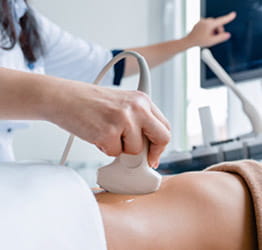
While undergoing treatment, the patient lies on a padded table equipped with inflation and deflation valves connected to three pairs of air-driven compressive cuffs that are wrapped around the legs and lower buttocks. The pumping cycle of the cuffs is synchronized in time with the patient's heartbeat. When the heart is in the relaxed state, air is inflated into the cuffs to move blood back towards the heart in an attempt to increase blood flow to the heart muscle. When the heart is contracting and pumping blood, air is suddenly released from the cuffs creating a "drained" space in the lower body, thereby lowering resistance to the heart's pumping action. As a result, the heart has to do less work to pump out the amount of blood that the body needs.
Called the Prospective Evaluation of Enhanced External Counterpulsation in Congestive Heart failure (PEECH) study, it will evaluate improvements in exercise capacity and the quality of life for congestive heart failure patients. The study also will evaluate the reduction in the need for certain medications that congestive heart failure patients are typically prescribed.
“Heart failure affects nearly 5 million Americans and kills 250,000 people each year. In fact, this growing epidemic contributes to more hospitalizations than all forms of cancer combined,” said Ozlem Soran, M.D., research assistant professor of medicine at the Cardiovascular Institute at the University of Pittsburgh School of Medicine and investigator for the study at UPMC Presbyterian.
“The start of this major trial is an essential step towards determining if EECP is an effective non-invasive option for treating patients with congestive heart failure.”
The one-year, randomized PEECH study is expected to enroll 180 patients in 18 centers across the United States, including 15 patients at UPMC Presbyterian. Participants will undergo a total of 35 sessions over a seven-week period. Each session will consist of one hour of EECP treatment.
“It will compare the outcomes of those receiving EECP in addition to their standard medical care to those only receiving standard medical care,” said Dr. Soran.. "In a smaller, preliminary study we conducted, we found that EECP improved exercise capacity, quality of life and functional class, and that these effects are maintained over six months. This larger research study may verify those results."
Congestive heart failure occurs when the heart is unable to pump enough blood to meet the body’s demands, therefore failing to empty its chambers sufficiently. Blood then accumulates in the chest and lower limbs. Once diagnosed, the average survival for patients is approximately five years.
The study is sponsored by Vasomedical, Inc., the developer of EECP. For more information on the UPMC Cardiovascular Institute, visit the web site at upmc.com/Services/heart-vascular/Pages/default.aspx.
For more information on EECP visit the Vasomedical, Inc., web site at http://www.vasomedical.com.