















Cardiomyopathy means “disease of the heart muscle.” It can be acquired or inherited.
Many people live with cardiomyopathy, unaware that they have the condition.
UPMC offers a multidisciplinary approach to diagnosing and treating cardiomyopathy with the convenience of all services at one location.
On this page:
What Is Cardiomyopathy?
Cardiomyopathy is a disease that affects the heart muscle.
In cardiomyopathy, the damaged heart muscle becomes enlarged, thick, or rigid, and cannot pump blood effectively.
It's the leading cause of heart failure and the most common reason for needing a heart transplant.
Unlike other heart problems, cardiomyopathy frequently affects younger people.
What are the types of cardiomyopathy?
There are three types of cardiomyopathy:
- Dilated cardiomyopathy.
- Hypertrophic cardiomyopathy (HCM).
- Restrictive cardiomyopathy.
Dilated cardiomyopathy
- Most common form.
- Damaged heart muscles lead to an enlarged and floppy heart.
- Heart stretches as it tries to compensate for weakened pumping action.
- Often produces signs of congestive heart failure, such as breathlessness and fluid retention.
- Can lead to the formation of clots.
- Rarely, can occur after pregnancy, this is known as peripartum cardiomyopathy.
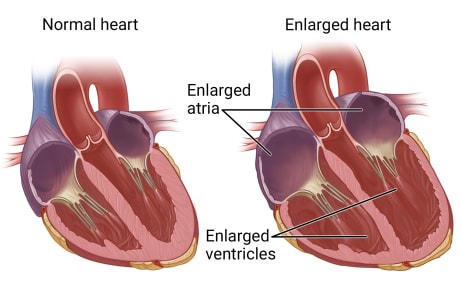
Dilated cardiomyopathy is a serious condition that weakens your heart muscle and causes it to stretch, or dilate. The condition usually starts in the heart's left lower chamber, but all the heart's upper and lower chambers (atria and ventricles) can become larger than normal.
When your heart muscle is weak, it can't pump out blood as well as it should, so more blood stays in your heart after each heartbeat. As more blood fills and stays in the heart, the heart muscle stretches even more and gets even weaker.
Hypertrophic cardiomyopathy (HCM)
- Second most common form; most often inherited.
- Causes heart wall to thicken, leaving less space for blood in the chambers and making the heart work harder to pump blood out.
- Can affect people of all ages.
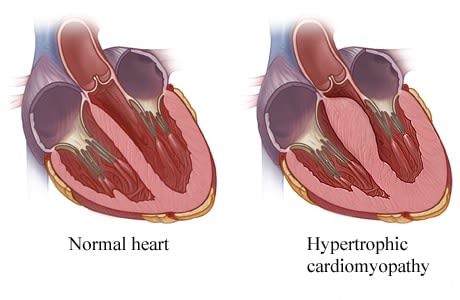
In hypertrophic cardiomyopathy (sometimes called HCM), the heart muscle is thicker than normal. This may cause problems for some people. The heart may not pump blood as well as it normally does. The heart chambers might be smaller than normal. Or the heart muscle may not relax between beats as it normally does.
Restrictive cardiomyopathy
- Causes portions of the heart wall to become rigid and lose flexibility.
- Heart chambers are unable to fill with blood properly because of stiffness in the heart.
What Are the Signs and Symptoms of Cardiomyopathy?
Cardiomyopathy symptoms are associated with heart failure or arrhythmia, and may include:
Shortness of breath.
Fatigue.
If you have such symptoms and are at risk for cardiomyopathy, see your doctor for a physical exam.
How Do You Diagnose Cardiomyopathy?
To confirm a diagnosis of cardiomyopathy, your doctor at the UPMC Heart and Vascular Institute's Hypertrophic Cardiomyopathy Center may order additional tests and procedures to check your heart's function.
These tests may include:
- Blood tests
- Chest x-ray
- Echocardiography
- Electrocardiogram
Testing results
Your doctor or nurse will tell you when to expect your test results and will call you when they're available.
How Do You Treat Cardiomyopathy?
At the UPMC our overall treatment goals are to:
- Manage your cardiomyopathy symptoms.
- Prevent the disease from worsening.
- Reduce the risk of complications.
Treatment depends on the type of cardiomyopathy you have and the seriousness of your condition.
There is no definitive cure for HCM, but most people are able to live long, healthy lives under the care of their doctors.
Lifestyle changes
- Stopping alcohol use.
- Monitoring salt intake.
Medicine to treat cardiomyopathy
Medication for cardiomyopathy will help to:
- Lower blood pressure.
- Help your heart pump.
- Reduce excess fluid.
Surgery for cardiomyopathy
If the obstruction of outflow of blood from the left ventricle to the body is extremely severe, the thickened heart muscle can be “trimmed” using one of two surgical techniques:
- Surgical myectomy — open-heart surgery performed to cut away the portion of the muscle that is thickened, relieving the obstruction to blood flow.
- Alcohol septal ablation — a heart catheterization procedure used to introduce a catheter into one of the small arteries that brings blood to the abnormally thickened septum; alcohol is injected into the artery to reduce the size of the muscle.
Additional cardiomyopathy procedures
- Surgically implanted device — that helps maintain proper heart rhythm.
- Ablation procedure — Removes extra heart tissue to reduce thickening, also helps heart perform better.
- Heart transplant — for a severely damaged heart.
