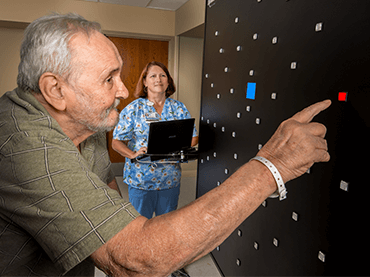
 The Dynavision D2 is a board with 64 3D light-up targets arranged in five rings to challenge balance, agility, and reaction time. Progress can be tracked over time.
How it works
The Dynavision D2 is a 4x4-foot square that is height-adjustable. It offers multiple modes to adjust the target’s location, color, duration, and frequency. The LED screen located at eye level can be used to flash numbers, letters, words, and math problems along with the lights, to further increase the challenge.
What it does
This activity challenges vision, reaction time, balance, arm range of motion, and multi-tasking skills. It can be performed while seated or standing and in conjunction with varied surfaces to create a balance challenge.
Who it helps
Originally developed for hockey goalies, the Dynavision D2 can help people with neurological and orthopaedic conditions to improve:
- Vision.
- Strength.
- Balance.
- Range of motion.
- Cognition.
- Coordination.
Where it is available (inpatient)
















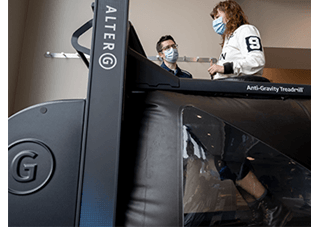 The AlterG utilizes NASA unweighting technology to reduce the impact of walking or running to ease function and aerobic exercise during recovery.
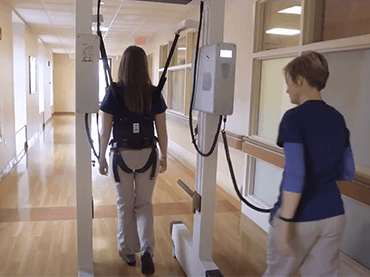 The Andago enables upright, hands-free walking that bridges the gap between treadmill-based gait training and free walking.
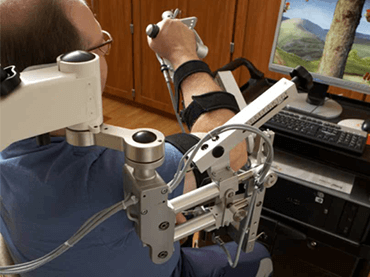 The Armeo devices use game-like augmented performance feedback to provide training in strength and range of motion in exercises that can be tailored to the user.
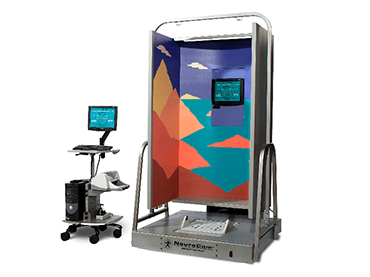
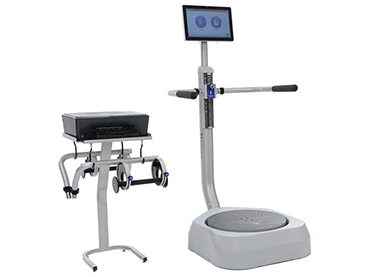 This ergonomically designed, easy-to-operate system helps users grasp, open, and close the hand.
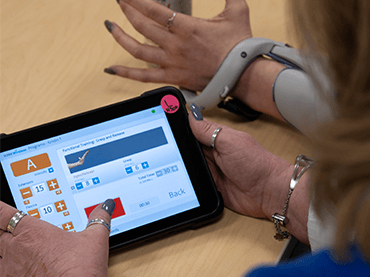 This is an ergonomically designed, easy-to-operate system that helps users grasp, open, and close the hand.
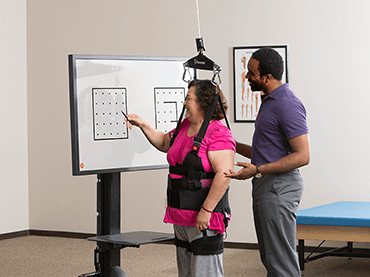 Using a portable touchscreen, the user plays visual games that record and track progress over time.
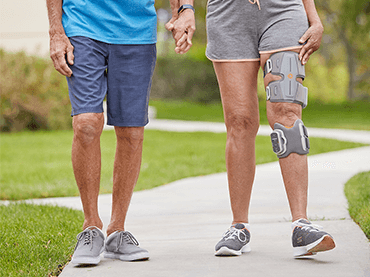
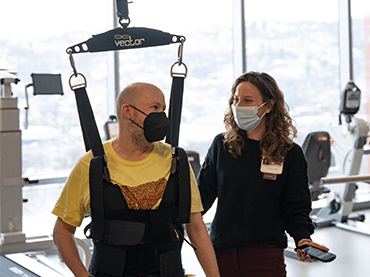 This system provides dynamic body weight support to work on balance, walking, and activities of daily living.
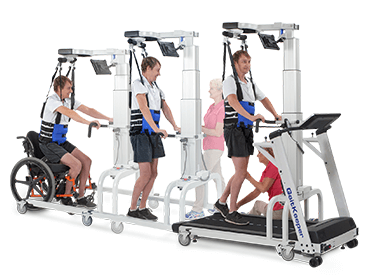 LiteGait provides posture control and weight-bearing assistance for fall-free rehabilitation.
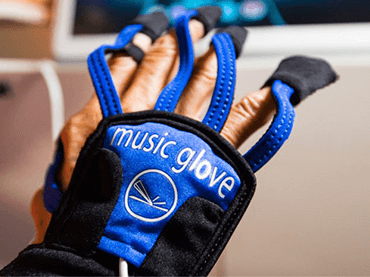 The MusicGlove is a rehabilitation tool designed to help people regain lost hand function using a glove with sensors and a musical video game.
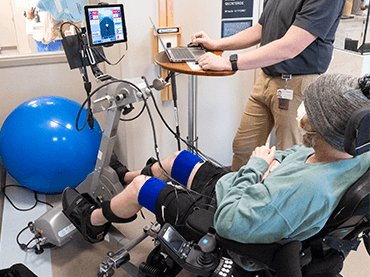 This technology helps to maintain/increase muscle mass in arm or leg and core muscles through integrated functional electrical stimulation combined with motor assistance/resistance activities for cycling.
