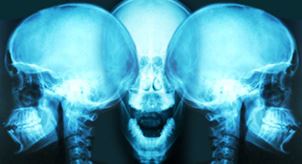
When trauma, disease, or birth defects affect function of the face and skull, it can destroy a person's:
- Ability to communicate
- Self-image
- Quality of life
While surgeons have successfully performed face transplantation, people must take anti-rejection drugs for the rest of their life.
McGowan Institute researchers are designing techniques to give patients a natural-looking, fully functioning face that their immune system won't reject.
Implants to Help Regenerate Complex Facial Structures
Researchers are working on lab-grown implants that can help regenerate the complex facial structures of bone, cartilage, muscle, and skin.
Charles Sfier, DDS, PhD, leads the Center for Craniofacial Regeneration. The center designs tissue engineering-based treatments for wounds and defects of the face and skull that restore function and appearance.
Because the tissues of the face and skull are many and complex, the Center’s team represents many disciplines. And they're rooted in the many achievements by University of Pittsburgh researchers in tissue regeneration and biomaterial development.
In 2017, the University of Pittsburgh School of Dental Medicine received an $11.7grant to advance tissue regeneration therapies for craniofacial tissues.
The grant allows researchers to guide new treatments from the research stages through preclinical studies and into human clinical trials. Charles Sfeir, DDS, PhD, and William Wagner, PhD, are lead researchers from the McGowan Institute.
Learn more about the Center for Craniofacial Regeneration.
Vascular Tissue Transplant Research
Mario G. Solari, MD, and Kia Washington, MD, lead research in the Vascularized Composite Allotransplantation and Microsurgery (VCAM) Lab.
They research and perform microsurgical transplantation of tissues that have blood vessels, such as.
- Facial tissue
- Whole eye
- Limb
They also study the components of muscle, nerve, skin, and bone.
Read more about the VCAM Lab.
Fat Grafting for Facial Reconstruction
To help new tissues join with a person’s own, researchers are working on methods that rely on a person's own cells.
The McGowan Institute's J. Peter Rubin, MD, FACS, is researching a new form of facial reconstruction, called fat grafting. Fat grafting can help improve soft tissue defects in the head and face.
Fat grafting is common. Plastic surgeons performed about 65,000 fat graft procedures in 2011. But, using it for facial reconstruction is a completely new, experimental use of this well-known treatment.
Dr. Rubin believes this technique of fat grafting could be of great benefit to people with severe head and face injuries.
Head and Neck Trauma in the U.S. — A Study
A 2014 study queried the 2011 U.S. Nationwide Emergency Department (ED) Sample for primary diagnosis of head and neck injury encounters.
The study found the following about primary injuries of the head and neck:
- 131 million ED encounters in the U.S.
- A weighted total of 5,418,539 visits.
- Average patient age was 30 years (SE=0.4) and 56.8% were male.
- A fall or blunt trauma caused 64% of injuries. Open wounds comprised 41.8% of injuries.
- The most common treatment was laceration repair (70%).
- The ED discharged most patients (97%).
- Death rate was less than 1%.
- Predictors of admission and mortality (p<0.05) included multiple trauma, trauma to blood vessels, and burns.
- Other risk factors included foreign body, older age, and male gender.
Read the full head and neck trauma study.
















