About Stroke — The Causes and Risks
In the United States, stroke:
- Affects more than 750,000 people each year.
- Is the leading cause of adult disability.
- Is the fourth-leading cause of death.
Through advances in medical care, more people than ever before survive strokes.
The Warning Signs of Stroke
- One-sided weakness
- Numbness on one side of face, arm, or leg
- Slurred or garbled speech
- Difficulty talking to or understanding others
- Loss of vision or difficulty seeing in one eye
- Double vision
- Difficulty with balance or coordination of arms or legs
- Severe headache (the worst headache of your life)
Causes of Stroke
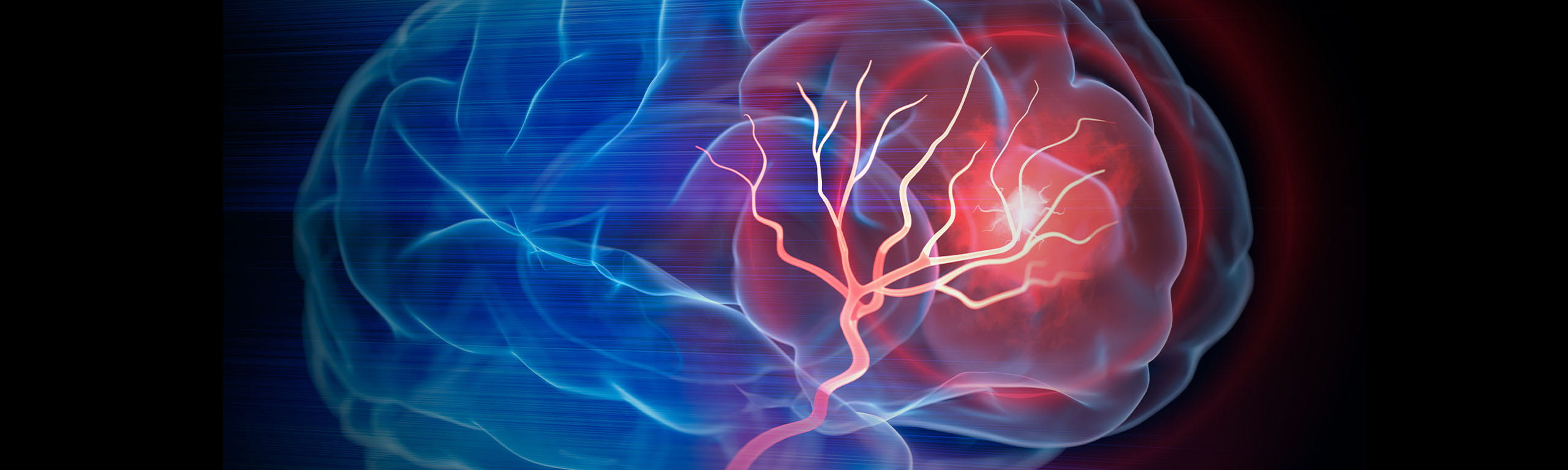
A stroke most often occurs when blood flow to the brain becomes blocked (called ischemic stroke).
One of the following problems may cause this blockage:
- A build-up of fatty substances (atherosclerotic plaque) along an artery's inner lining causes it to narrow, reduces its elasticity, and decreases its blood flow.
- A clot forms in an artery supplying blood to the brain.
- A clot forms somewhere in the body — often the heart — and breaks free, traveling to an artery supplying blood to the brain and becoming lodged there.
A stroke also may occur if a blood vessel breaks and bleeds into or around the brain.
If this happens, it is called a hemorrhagic stroke.
Stroke Risk Factors
A risk factor is something that increases your chance of getting a disease or condition.
Some risk factors can be reduced by changing personal habits or receiving medical treatment. These are called modifiable risk factors. Increased risks based on medical history, age, and race are called nonmodifiable risk factors.
Modifiable risk factors:
- High blood pressure
- Narrowing of arteries that supply blood to the brain due to atherosclerosis
- High cholesterol levels, particularly low-density lipoprotein (LDL) cholesterol
- Smoking
- Obesity
- Lack of exercise
- Drinking excessive amounts of alcohol
- Diabetes mellitus
- Atrial fibrillation, a treatable abnormality of heart rhythm
Nonmodifiable risk factors:
- A prior stroke or pre-existing cardiovascular disease other than stroke
- A prior transient ischemic attack (TIA) — a temporary interrupting of the brain's blood supply, often called a mini-stroke
- Family members who have had strokes
- Age 60 or older
- African-American
TIA: Warning Stroke
Some people experience a "warning stroke" or transient ischemic attack (TIA).
These are symptoms of a stroke that resolve completely, usually within hours.
People who have had a TIA are at a significantly increased risk of having a full-blown stroke sometime in the near future.