


Celebrating Transplant Excellence
Across the United States, more than 100,000 people are waiting for a life-saving organ transplant. Every nine minutes, someone in the United States joins the national organ transplant waiting list. Every day, 17 people on that list die waiting for an organ because there are not enough donors. By registering as an organ donor or becoming a living donor, you offer hope and a second chance to these individuals.
Living Donation vs. Deceased Donation
There are two ways to donate organs — living and deceased donation.
Deceased Donation
Deceased donation is the process of donating an organ, part of an organ, eye, or tissue at the time of the donor’s death. There is no age limit to becoming an organ donor, and everyone is eligible regardless of race, health, and ethnicity. Almost all major religions support organ donation.
Registering to become an organ, eye, and tissue donor is easy and has the potential to save eight lives and help more than 75 people. You can register your decision to become an organ donor when you renew your driver’s license, or you can register online through the National Donate Life Registry.
Living Donation
Living donation is a type of organ donation that helps save the lives of those on the liver or kidney transplant waiting list. In addition to offering an alternative to the transplant waiting list, living-donor transplants save two lives: the recipient and the person next in line on the waiting list.
During a living donor transplant, a healthy donor can give a portion of their liver or one of their kidneys to a patient on the transplant waiting list.
Registering to become a living donor
The first step is to complete the living donor registration. This helps determine if a potential donor meets the initial qualifications to become a living donor.
- Pittsburgh and Erie: UPMC Transplant Services
- Harrisburg: TxAccess Patient Referral
After registration, a living donor undergoes an extensive transplant evaluation. This ensures they are a good candidate for living-donor surgery and that donating poses the least possible risk to both the donor and the recipient.
Organ donation can change — and save — lives.
Kidney Transplant Waiting List Patient Stories
Each video captures a patient’s unique journey through the kidney transplant waiting list.
Frank E.
Gerald C.
Laurie H.
Celebrating Transplant Excellence
Established in 1981, UPMC Transplant Services has performed more than 20,000 organ transplants. That includes liver, kidney, pancreas, small bowel, heart, lung, double-lung, single-lung, and multiple-organ transplants. As a pioneer in solid-organ transplantation, our program has been challenged with some of the most difficult and complex cases.
Experience Matters
At UPMC, we provide patients with education and step-by-step support throughout their transplant journey. Our program is comprised of experienced transplant surgeons, hepatologists, nephrologists, pulmonologists, cardiologists. We also have a support team that includes transplant coordinators, social workers, financial/insurance coordinators, pharmacists, nurse practitioners, and dietitians.
Care Close to Home
Today, UPMC is one of the oldest and largest transplant programs in the country. We are committed to improving access to transplant. That is why we have expanded our program to offer lifesaving transplant care in Pittsburgh, Erie, and central Pennsylvania, as well as transplant evaluations in north central Pennsylvania.
UPMC and Donate Life America
In 2016, UPMC and Donate Life America partnered together with the goals to reduce the number of people on the pediatric and adult liver and kidney waiting lists, reduce waiting-list deaths, and improve access to transplants nationally. Follow the UPMC and Donate Life America Living Donor Transplant Facebook page to become part of our transplant community!
Meet Judy, Kim, Laurie, and Wylder
Learn about the life-saving impact organ donors can make.
Judy Gradisek
Diagnosed with type 1 diabetes at 15, Judy Gradisek managed her condition for many years with insulin therapy. Around the age of 40, she was told that she would need to go on dialysis soon or receive a kidney transplant. Judy was referred to UPMC’s Kidney Transplant Program where she underwent a simultaneous kidney and pancreas (SPK) transplant.
Read Judy's story.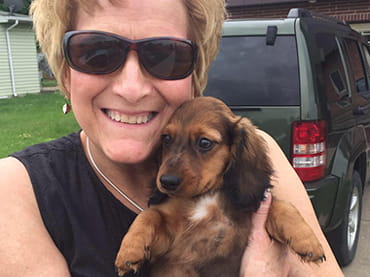
Kim Watt
Kim Watt faced an unexpected battle with liver disease after years of being symptom-free and was placed on the transplant waiting list at UPMC. In December 2023, she received a life-changing call – an anonymous living donor had stepped forward. In February 2024, Kim underwent a successful liver transplant.
Read Kim’s story.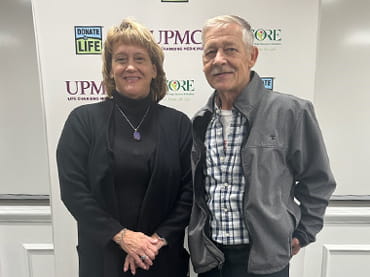
Laurie Gerow
No matter what life throws her way, Laurie lives by two simple words – “just breathe.” Even when she was sick, this mantra kept her going. After several months and working hard to be added to the waiting list, Laurie underwent a lung transplant at UPMC in July 2023 and has never looked back.
Read Laurie’s story.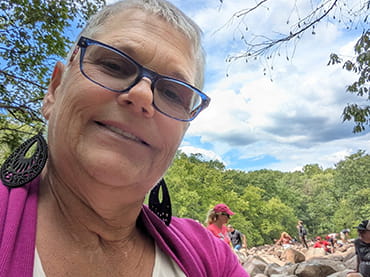
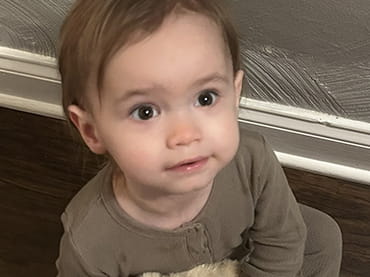
Wylder
In August 2024, one month shy of his first birthday, Wylder developed a cough during a family vacation.
“We ended up in the emergency department near our home in West Virginia, where they discovered Wylder’s heart was enlarged and inflamed,” Kayla, his mother, recalls. “Before long, his condition went from bad to worse.”
It was determined that Wylder needed a heart transplant, and he was quickly transported to UPMC Children’s Hospital of Pittsburgh, where the family met Luciana da Fonseca da Silva, MD.
“She’s wonderful with kids,” Kayla explains. “Everyone we encountered was so welcoming and reassuring. We knew we could put our trust in them to take care of Wylder.”
In April 2025, the family got the call — it was time for the transplant. Mario Castro-Medina, MD, performed the surgery on a day Kayla will never forget.
“When Wylder’s transplant was done, the nurses were crying tears of joy. His doctors came into the room and gave us hugs. We even shared pictures of how good he looked with people working at the front desk.”
During the recovery process, Wylder sometimes had trouble sleeping, but staff at the hospital found him a stuffed puppy with a heartbeat. Resting that under his feet helped him fall asleep.
“We made friends with everyone in the hospital,” Kayla recalls. “UPMC Children’s deserves every accolade in the world. They truly are the best of the best.”


