Skip to Content
Advertisement
800-533-8762
  • Careers
  • Newsroom
  • Health Care Professionals
  • About Us
  • Contact Us
UPMC
  • Find a Doctor
  • Conditions
  • Services
    • Frequently Searched Services
    • Frequently Searched Services
      Allergy & Immunology Behavioral & Mental Health Cancer Ear, Nose & Throat Endocrinology Gastroenterology Heart & Vascular Imaging Neurosciences Orthopaedics
      Physical Rehabilitation Plastic & Reconstructive Surgery Primary Care Senior Services Sports Medicine Telemedicine Transplant Surgery Walk-In Care Weight Management Women’s Health
      See all Services
    • Services by Region
    • Find a UPMC health care facility close to you quickly by browsing by region.
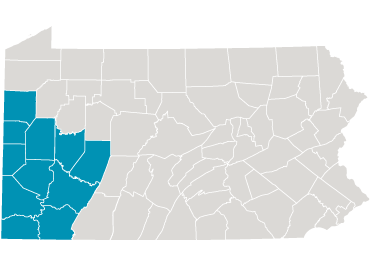
      UPMC in Western Pa. Western Pa. and New York
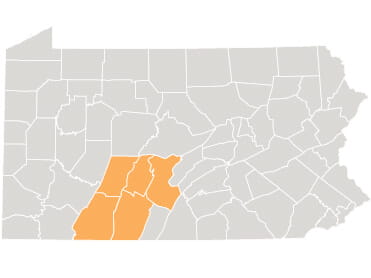
      Highlighted Regional Map of UPMC in Central Pa. Central Pa.
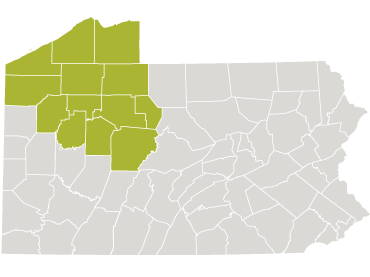
      UPMC in North Central Pa. North Central Pa.
      UPMC in Western Md. Maryland & West Virginia
    • See All Services
  • Locations
    • Locations by Type
    • Locations by Type
      UPMC hospitals
      Hospitals
      Physical Therapy
      Physical Therapy
      Urgent care
      Walk-In Care
      UPMC Outpatient Centers
      Outpatient Centers
      UPMC Imaging Services
      Imaging
      Community Health Centers
      Community Health Centers
      See All Locations
    • Locations by Region
    • Locations by Region
      UPMC in Southwest Pa. Southwest Pa.
      UPMC in North Central Pa. North Central Pa.
      UPMC in Northwest Pa and Ny. Northwest Pa. & Western N.Y.
      UPMC in West Central Pa. West Central Pa.
      Highlighted Regional Map of UPMC in Central Pa. Central Pa.
      UPMC in Western Md. Maryland & West Virginia
    • See All Locations
  • Patients & Visitors
    • Patient & Visitor Resources
    • Patient & Visitor Resources
      Patients and Visitors Resources Pay a Bill Classes & Events Health Library International Traveling Patients Medical Records
      Patient Information Patient Portals Privacy Information Shared Decision Making Visitor Information
      Man uses mobile phone
      Pay a Bill
      Nurse reviews medical chart
      Request Medical Records
  • MyUPMC
    • MyUPMC
    • MyUPMC

      Log in to MyUPMC About MyUPMC Proxy & Adolescent Access FAQs
    • Other Patient Portals
    • Other Patient Portals

      UPMC-GoHealth Urgent Care Portal myWHS My Trinity Health Portal
  • Log in to MyUPMC
  • Schedule an appointment
  • Request medical records
  • Pay a bill
  • Learn about financial assistance
  • Find classes & events
  • Send a patient an eCard
  • Make a donation
  • Volunteer
  • Read UPMC HealthBeat
  • Explore UPMC Careers
Skip to Content
UPMC
  • Find a Doctor
    • Doctor Search
  • Conditions
    • Search Conditions We Treat
  • Services
    • Frequently Searched Services
      • Heart and Vascular Services
      • Neurosciences Services
      • Orthopaedics Services
      • Primary Care Services
      • Spine Care Services
      • Sports Medicine Services
      • Transplant Services
      • Women's Health Services
      • See all Services
    • Services by Region
      • Find Care in Western Pa
      • Find Care in Central Pa
      • Find Care in North Central Pa
      • Find Care in Western Maryland
    • See All Services
  • Locations
    • Locations by Type
      • Hospitals
      • Walk-In Care
      • Imaging
      • Physical Therapy
      • Outpatient
      • Community Health Centers
      • See All Locations
    • Locations by Region
      • Central Pa.
      • Maryland and West Virginia
      • North Central Pa.
      • Northwest Pa. & Western N.Y.
      • Southwest Pa.
      • West Central Pa.
    • See All Locations
  • Patients & Visitors
    • MyUPMC
    • More Patient & Visitor Resources
      • Pay a Bill
      • Classes & Events
      • Health Library
      • International Traveling Patients
      • Medical Records
      • Patient Information
      • Privacy Information
      • Shared Decision Making
      • Visitor Information
      • View All Patients and Visitors Resources
  • MyUPMC
    • MyUPMC
      • Log in to MyUPMC
      • About MyUPMC
      • FAQs
      • Proxy & Adolescent Access
    • Other Patient Portals
      • UPMC GoHealth Urgent Care Portal
      • myWHS
      • My Trinity Health Portal
  • I Want To
    • Log in to MyUPMC
    • Schedule an appointment
    • Request medical records
    • Pay a bill
    • Learn about financial assistance
    • Find classes & events
    • Send a patient an eCard
    • Make a donation
    • Volunteer
    • Read UPMC HealthBeat
    • Explore UPMC Careers
  • Careers
  • Contact Us
  • Newsroom
  • UPMC >
  • Health Care Professionals >
  • Education & Training >
  • Medical Laboratory Science Programs >
  • UPMC Trinity Medical Laboratory Science Program
Health Care Professionals
Physician Information
Clinical Tools & Resources
Education & Training
Graduate Medical Education
Opportunities
Allied Health Professionals
Advanced Practice Providers
Center for Advanced Robotics Training
Medical Laboratory Science Programs
UPMC Trinity Medical Laboratory Science Program
Apply
Program Outcomes
Schools of Nursing
Schools of Radiography
Clinical Pastoral Education
Job Shadowing and Facility Tour Opportunities
Our Departments and Divisions
Credentialing
Beckwith Center for Shared Decision Making

UPMC Trinity Medical Laboratory Science Program

Medical Laboratory Science is an allied health discipline that provides routine and specialized clinical laboratory testing on a variety of patient specimens. Such test results aid in the diagnosis, treatment, prognosis, and prevention of disease, and maintenance of health. Testing procedures are performed using manual techniques, molecular diagnostics, and state-of-the-art technology employing exceedingly sophisticated instrumentation. These tasks require extremely competent individuals who can face the dramatic changes in such a dynamic and ever-changing field. The Medical Laboratory Scientist of today is a superbly educated individual who is a vital member of the healthcare team!

The UPMC Trinity MLS Program is fully accredited and provides our students with 11 months of intensive education in all the areas of the clinical laboratory: Clinical Chemistry, Hematology/Coagulation, Immunology, Immunohematology, Microbiology, Urinalysis and Body Fluid Analysis, and Laboratory Operations. Our graduates are well-equipped with the knowledge and experience to help fill the overwhelming vacancies in hospital laboratories locally, regionally, and nationwide.

Program Outcomes

Apply Now

About Our Program

Additional Information

Mission

The UPMC Trinity Medical Laboratory Science Program adheres to the mission of the ministry of the hospital to deliver health care of the highest quality in a respectful, reverent, and compassionate manner conducive to the dignity of the individual. The program offers this Professional Year of Study for eligible students who wish to pursue a career in Medical Laboratory Science. Intense theoretical instruction and laboratory experience will be provided to the students to aid them in developing the knowledge, skills, attitudes, and certification required of a competent laboratory professional.

Goals

The major goals of the program are:

  1. To deliver the educational experience necessary for students to achieve the competencies needed to function at the level of a career-entry MLS, and to pass the national certification exam, meeting all benchmarks set by NAACLS for graduation, employment, and certification examination pass rates.
  2. To convey the laboratory’s role in quality patient care with an emphasis on safety, compassion, cooperation, effective communication, professionalism, and continuous quality improvement.
  3. To promote a love of learning in order to establish a desire for continuing education, professional development, and certification maintenance.
  4. To prepare graduates to assume the roles of supervisors, managers, and educators at an introductory level.

Graduate Outcomes

Upon successful completion of the program, the graduate will be able to function at the level of a career-entry MLS and be able to:

  1. Obtain patient specimens via venipuncture and perform complex analyses on all patient specimens, using a variety of manual and automated techniques in all areas of the laboratory, correlating results with clinical significance.
  2. Recognize problems, identify causes (technical, instrumental, physiological), distinguish pre-analytic, analytic, and post-analytic variables, synthesize alternatives, and determine solutions using diverse methods of troubleshooting and problem-solving techniques appropriate to the situation.
  3. Exhibit knowledge in action of laboratory regulations, quality control, continuous quality improvement, and best practices of safety, in all aspects of patient contact, specimen handling, testing, and disposal of materials with integrity and culpability, having the capacity and resourcefulness to assume the responsibility and accountability for accurate results.
  4. Actively participate in continuing education and in-service programs, especially recognizing the responsibility to continue learning in areas of supervision (being answerable and accountable for the work performed in the area of supervision), management, and education (willingness to teach/train new employees); evaluation techniques; and future planning and implementation of new laboratory methods and testing.
  5. Communicate effectively, both verbally and in writing, to patients and all members of the health-care team with accuracy, mindfulness, compassion, and empathy.
  6. Display acceptable professional and ethical standards in actions, dress, and attitude.
  7. Be prepared to take the national certification exam.

In 1954, the Ohio Valley Hospital began the School of Medical Technology. This program was accredited by the National Accrediting Agency for Clinical Laboratory Sciences (NAACLS) and provided area and regional hospital laboratories with highly qualified technologists/scientists. Unfortunately, when the affiliation between Ohio Valley and St. John Hospital (forming Trinity Health System) occurred in the mid-1990s, the school sought and was granted inactive status by NAACLS due to logistical constraints. The school was officially closed in 2001. Today, there is an urgent need for qualified laboratory professionals. The retirement rate of technologists/scientists and technicians is at an all-time high. The limited number of laboratory science programs which are graduating MLSs cannot keep up with the demand. Therefore, in late 2018, after much consideration and study, Trinity Health System decided to re-open the School of Medical Laboratory Science. UPMC acquired Trinity in 2026 and the school now functions as UPMC Trinity Medical Laboratory Science Program.

We believe that it is our responsibility as medical laboratory science educators to develop a program which expands on the basic requirements of pre-analytic, analytic, and post-analytic factors, and introduces the higher levels of medical laboratory science and technology. We emphasize theoretical principles and their clinical interpretation through a selected series of experiences provided in our laboratory. Through the guidance and instruction of a qualified and dedicated faculty, the student grows in his/her ability to solve problems, to make judgements, and to assume responsibility in the clinical setting. These experiences stimulate self-direction and self-evaluation, while providing for personal satisfaction and individual growth. We believe this balanced program structure provides the student with both the science and the art of medical laboratory science. We stress that the patient is our primary obligation, and that the ministry of UPMC Trinity is to provide patients with superior and safe healthcare. We strive to create an environment for patients and their families that is professional, comprehensive, and compassionate.

Students enrolled in the UPMC Trinity Medical Laboratory Science Program are subject to all policies and procedures of the program, and to the policies of UPMC Trinity concerning student educational programs.

UPMC Trinity accepts a maximum of four (4) students per year into the Medical Laboratory Science Program. The Professional Year of Study covers a period of eleven (11) consecutive months during which time the students rotate in each department of the clinical laboratory and participate in a formal lecture program, including Laboratory Methods, Immunohematology, Clinical Chemistry, Microbiology (Bacteriology, Parasitology, Mycology, and Virology), Hematology/Coagulation, Urinalysis and Body Fluid Analysis, Immunology, Laboratory Operations (Management, Educational Methodologies, and Special Projects), as well as phlebotomy of inpatients and outpatients. Molecular Diagnostics, while not a separate course, is covered in other subject areas. All instruction follows a planned outline with objectives, text assignments, informal bench lectures, discussions, demonstrations, supervised practice, practical examinations, and oral and written tests and quizzes. Pre-analytic factors and sample preparation; analytic factors and test methodology, theory, instrumentation, and quality control and assurance; and post-analytic factors and clinical correlation of results, are taught in theory and emphasized on the bench.

The students’ year consists of a total of 40 hours per week for 46 weeks. Classes typically begin the first or second Monday in August, and end the fourth Friday in June of the following year. The hours are Monday through Friday, usually 6:00 AM to 2:30 PM, with students being made aware of any changes with ample time to adjust. During this time the student spends approximately 400 hours in formal lecture and 1200 hours in programmed practical laboratory activity. Instruction and practice in Phlebotomy are encountered during orientation and continue as part of the clinical practica.

Formal class lectures which are given by the program director, pathologists, and other qualified medical laboratory scientists/technologists are scheduled 8-10 hours per week in the laboratory classroom or hospital conference rooms. The lectures are designed to cover theoretical principles relating to laboratory testing, biochemical processes occurring in both health and disease, and the correlation of laboratory data to diagnosis and treatment. The student attends lectures as outlined with the balance of time spent in practical experience in the hospital laboratory. Our students learn in “real time”, alongside the MLSs performing patient testing. A comprehensive “mock registry” exam is given one to two weeks prior to the end of the year, and a certificate of completion is awarded to the successful student.

Students are strongly encouraged to take the Board of Certification exam offered by the American Society for Clinical Pathology or the American Medical Technologists certification exam within a few weeks of successful completion of the program. Neither completion of the program, nor the certificate awarded is contingent upon taking or passing the either exam.

The UPMC Trinity Medical Laboratory Science Program is fully accredited by the National Accrediting Agency for Clinical Laboratory Science (NAACLS). Students who successfully complete the program are eligible to take the American Society for Clinical Pathology Board of Certification Exam or the American Medical Technologist Certification Exam. More information on the accreditation process can be found by contacting NAACLS:

National Accrediting Agency for Clinical Laboratory Science
5600 N. River Rd, Suite 720
Rosemont IL 60018-5119
773-714-8880
NAACLS.org

More information regarding ASCP BOC certification can be found at www.ASCP.org.

More information regarding AMT certification can be found at www.americanmedtech.org

UPMC Trinity Medical Laboratory Science Program is affiliated with Youngstown State University to provide MLS majors their final year, upon which 32 credits for the Professional Year of Study will be transferred to the university to fulfill requirements for a BS in MLS. The program is also offered to those students who already possess a Bachelor of Science in Biology, Chemistry, or a related field, and who meet the published requirements, culminating in the awarding of a certificate of completion.

Prerequisites*

  • Biology: A minimum of 16 semester hours (24 quarter hours) to include immunology and a full course, with a laboratory section, in microbiology, taken within the last 7 years. The coursework in immunology may be included as a separate course or as part of another course. All biology courses must be applicable toward a major in biology or medical laboratory science/technology. Survey courses are not acceptable.
  • Chemistry: A minimum of 16 semester hours (24 quarter hours) to include organic and/or biochemistry with a laboratory section, taken within the last 7 years. These courses must be applicable toward a major in chemistry or medical laboratory science/technology. Survey courses are not acceptable.
  • Mathematics: A minimum of one (1) course of 3/4 semester hours (5 quarter hours) in college level math. Remedial math is not acceptable.
  • Courses in computer science/technology, management, education, and medical terminology are recommended but not required. Each candidate should have achieved or preferably surpassed a cumulative GPA of 2.7 and a minimum GPA of 2.7 in Biology and Chemistry courses (4.0 grading system).

Foreign Baccalaureate Degrees

Individuals possessing a Baccalaureate Degree from a country other than the United States and wanting to enter a NAACLS accredited program in Medical Laboratory Science must meet the specified requirements which are subject to review and evaluation by the Program Director and the American Society for Clinical Pathology. Course descriptions, syllabi, and/or curricula must be provided upon request. Visit www.ascp.org/international for country specific information on verification of academic information. Certain countries' programs do not require transcript evaluations. If a transcript evaluation is required, please submit an original or photocopy of a transcript evaluation completed by an approved evaluation agency. Only evaluations from these listed agencies will be accepted. Contact the agency directly for information on obtaining an evaluation verifying U.S. degree equivalency and a course by course evaluation.

Send your transcript evaluation via one of the following:

  • Email: ascpinternational@ascp.org
  • Mail: ASCP International, 33 W. Monroe St. Suite 1600, Chicago, IL 60603-5617 USA

Discrimination/Disability Policies

The Medical Laboratory Science Program does not discriminate on the basis of race, color, religion, sex, national origin, age, ancestry, or disability in the admission of students. The school provides reasonable accommodations to students with disabilities. Those students are required to inform the program director immediately upon admission as to the nature of the disability.

*These Prerequisites can be requirements for a previous Baccalaureate Degree in Biology or Chemistry possessed by the applicant. These students would be considered “4+1”. If an applicant has a bachelor’s degree older than 7 years, please contact the program director to discuss updating academic preparation. The MLS Program is affiliated with Youngstown State University, where these courses would be completed prior to the Professional Year of Study, achieving a minimum of 90 semester hours, and upon successful completion of the program, will fulfill the remaining credits required for a Bachelor of Science degree. Such students are considered “3+1”. If an accepted applicant is currently or has previously worked in a Trinity hospital laboratory within the last year, the applicant may request IN WRITING, a reduced or exemption from a practicum/bench rotation. To initiate this process, the applicant must have his/her prior experience in each department documented by the laboratory supervisor. A shortened clinical rotation(s) must be verified by demonstrating proficiency in the particular area(s) by written, oral, and/or practical examinations in accordance with established Cognitive/Psychomotor Objectives and Competency Check-offs of the UPMC Trinity Medical Laboratory Science Program, conducted by the department section head and/or Program Director. If all objectives have been met with the maximum achievable competency, the student will be able to forgo the scheduled rotation in that particular department/section of the laboratory. This policy applies ONLY to those students employed by UPMC Trinity and who meet the required competencies BEFORE beginning the Professional Year of Study, or at the discretion of the Program Director. NO ADJUSTMENT WILL BE MADE TO REDUCE THE DIDACTIC PORTION OF THE PROGRAM.

Students of affiliated colleges/universities will pay tuition to that institution according to their policies.

The following chart describes the tuition and fees for 4 + 1 students (PDF).

ALL students are responsible for purchasing their books for the entire Professional Year of Study by the first day of class. The textbook title, author, publisher, edition, and ISBN number will be communicated by the Program Director to the students within one month of the start of classes. It is imperative that students purchase the correct edition of the textbooks. All 4+1 students must purchase Liability Insurance for the year; information will be communicated by the PD in ample time for purchase.

In addition, all students are responsible for appropriate burgundy/wine colored plain scrubs, professional vinyl shoes (sneakers are acceptable without bright colors/logos, or cloth/mesh bodies), and white lab coat. Housing, meals, and transportation are the full responsibility of the student. The hospital offers a cafeteria and café, and free parking by the YMCA within walking distance of the building.

The Technical Standards are non-academic requirements established by the Medical Laboratory Science Program and are evidence of the Essential Functions that each MLS student must be able to accomplish. Applicants/students must be able to affirm, with or without reasonable accommodations, their ability to engage in laboratory education and activities in such a way that will not increase the occupational hazards affecting themselves, patients, coworkers, employees, other students, the general public, or the facilities in which the work is to be performed.

  • Intellectual: The student must be able to:
    • comprehend complicated theoretical/practical principles
    • apply critical thinking skills, sound judgement, and problem-solving skills in order to evaluate results and recognize and troubleshoot anomalies in specimens, tests, and instrumentation
    • work independently in a well-organized manner
  • Sensory: The student must be able to:
    • read charts, graphs, text, numbers, and symbols displayed in print and on laboratory instrumentation/video monitors
    • recognize, discriminate, and characterize colors, clarity, and viscosity
    • observe microscopic materials on clinical grade binocular microscopes
    • accurately judge depth and distance
    • recognize visual and audible alarms
    • follow verbal and written instruction
  • Mobility: The student must be able to:
    • possess all gross and fine motor skills necessary to accurately collect specimens and perform diagnostic procedures according to existing laboratory safety standards
    • manipulate all laboratory tools, instruments, equipment, and computer keyboards in a repetitive manner, if needed
    • sit/stand for prolonged periods of time
    • maneuver safely around the laboratory, clinical facility, and patient rooms/phlebotomy draw stations
    • occasionally lift up to 25 pounds and be able to reach benchtops and shelves
  • Communication: The student must be able to:
    • communicate effectively and accurately, verbally and in writing, in order to transmit information to all members of the healthcare team
    • explain procedures and instructions efficiently to patients, other students, and laboratory professionals when called upon to do so
    • deliver oral presentations to fellow students and other healthcare professionals
    • command proper use of the English language verbally (understandably) and in writing (legibly)
  • Behavior: The student must be able to:
    • possess the psychological stability required to respond quickly and efficiently in a manner appropriate to the situation, including high-stress circumstances and in times of patient distress
    • demonstrate superior time-management skills
    • exhibit integrity and be straightforward about uncertainties and errors
    • exercise independent judgement and accept constructive criticism
    • adapt the attitudes and actions necessary to be a team member
    • recognize diversity and treat fellow students, instructors, patients, families, all members of the healthcare team, and the general public ethically and with compassion, respect, and reverence, in keeping with the ministry and mission of UPMC Trinity
UPMC
200 Lothrop Street Pittsburgh, PA 15213

412-647-8762 800-533-8762

Patients And Visitors
  • Find a Doctor
  • Locations
  • Pay a Bill
  • Patient & Visitor Resources
  • Disabilities Resource Center
  • Services
  • Medical Records
  • No Surprises Act
  • Price Transparency
  • Financial Assistance
  • Classes & Events
  • Health Library
Health Care Professionals
  • Physician Information
  • Resources
  • Education & Training
  • Departments
  • Credentialing
Newsroom
  • Newsroom Home
  • Inside Life Changing Medicine Blog
  • News Releases
About
  • Why UPMC
  • Facts & Stats
  • Supply Chain Management
  • Community Commitment
  • Financials
  • Supporting UPMC
  • UPMC HealthBeat
  • UPMC Apps
  • UPMC Enterprises
  • UPMC Health Plan
  • UPMC International
  • Nondiscrimination Policy
Life changing is...
Follow UPMC
  • Contact Us
  • Website/Email Terms of Use
  • Medical Advice Disclaimer
  • Privacy Information
  • Active Privacy Alerts
  • Sitemap
© 2026 UPMC I Affiliated with the University of Pittsburgh Schools of the Health Sciences Supplemental content provided by WebMD Ignite. To learn more, visit webmdignite.com.
Find Care
Providers
Video Visit
MyUPMC Login

Helpful Prompts

  • cancel: Stops your conversation
  • help: Shows what this bot can do
  • terms: Shows terms of use and privacy statement
  • feedback: Give us feedback
Continue
UPMC
Restart Chat
Chat Help