















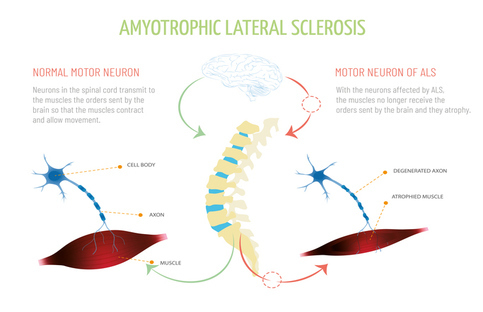
Amyotrophic lateral sclerosis (ALS), also known as Lou Gehrig’s disease, is a rare, terminal neurodegenerative disease that affects nerve cells in the spinal cord and brain. These nerve cells, called motor neurons, control muscle movement.
ALS causes motor neurons to die, leading to weakness and loss of muscle control that worsens over time and causes difficulty with movement, speech, swallowing, and breathing. There is no cure for ALS, but treatments may help manage symptoms and slow progression of the disease.
At UPMC, our specialists collaborate to coordinate care and develop the best treatment plan for people diagnosed with ALS, which may include opportunities to participate in research, including clinical trials for drug therapy.
On this page:
What Is ALS?
Amyotrophic lateral sclerosis (ALS), also known as Lou Gehrig’s disease, is a rare, terminal neurodegenerative disease that affects nerve cells in the spinal cord and brain. These nerve cells, called motor neurons, control muscle movement.
ALS causes motor neurons to die, leading to weakness and loss of muscle control that worsens over time and can make movement, speech, swallowing, and breathing more difficult.
What are the types of ALS?
There are two types of ALS, including:
- Familial ALS — Caused by an inherited gene passed to a child from a biological parent, and makes up about 10% of ALS cases.
- Sporadic ALS — Occurs randomly with no genetic cause and makes up about 90% of ALS cases.
How common is ALS?
About 5,000 new cases of ALS are diagnosed in the U.S. each year. The U.S. Centers for Disease Control and Prevention estimates that about 30,000 people in the U.S. are currently living with ALS.
What causes ALS?
Researchers aren’t sure what causes ALS. However, recurrent multiple traumatic brain injuries and exposure to environmental toxins, such as pesticides, lead, or mercury, may play a role. Rarely, ALS is caused by a gene mutation passed to a child from a biological parent.
ALS risk factors
More than 90% of ALS cases occur sporadically and are not inherited.
Although researchers aren’t sure what causes ALS, risk factors may include:
- Being a military veteran, possibly due to exposure to lead, pesticides, and other environmental toxins.
- Being male.
- Being over age 50.
- Having a family history of ALS.
Complications of ALS
ALS is a terminal illness, with about 50% of patients surviving over five years post-symptom onset. As symptoms worsen, many people lose their ability to move and breathe independently.
What Are the Signs and Symptoms of ALS?
Most people do not develop ALS symptoms until after age 50, but symptoms can develop in younger people.
What are the first symptoms of ALS?
Early symptoms of ALS include muscle weakness or stiffness in your arms and legs, as well as difficulty swallowing or speaking.
Symptoms may start in one area of your body, spread to other areas, and get worse over time.
As the condition progresses, symptoms may include:
- Choking, drooling, or gagging.
- Difficulty breathing.
- Difficulty standing, walking, running, or climbing stairs.
- Fatigue.
- Frequent falls.
- Head drop due to weak neck muscles.
- Involuntary emotional expressions.
- Gait disturbances and leg weakness.
- Muscle cramps, contractions (fasciculations), or stiffness (spasticity)
- Slow or slurred speech.
- Twitching in your hands, feet, shoulders, or tongue.
- Voice changes or hoarseness.
- Weight loss.
For most people, ALS does not affect the ability to think or remember. It also doesn’t cause problems with the senses, including sight, smell, taste, hearing, or touch.
When should I see a doctor about ALS symptoms?
If you have symptoms of ALS, you should schedule an appointment with your doctor as soon as possible.
How Do You Diagnose ALS?
Several conditions cause similar symptoms to ALS, so it may take time for your doctors to diagnose the condition. You may need to see several different medical providers and have different types of tests to rule out other conditions before your doctor can diagnose ALS.
What to expect during your visit
During your first visit, your doctor will:
- Ask about your symptoms.
- Order tests.
- Perform a physical and neurological exam.
- Review the medications you are taking.
- Review your personal and family medical history.
Tests to diagnose ALS
Your doctor may order tests to help diagnose ALS, including:
- Blood and urine tests — Performed to rule out other conditions.
- Breathing tests — Determine how well your muscles that control breathing are working.
- Electromyogram (EMG) — Uses electrical impulses to test how well your muscles are working.
- Genetic testing — Looks for a family history of ALS.
- Nerve conduction study — Uses electrical impulses to test how well your nerves are transmitting electrical signals to your muscles.
- Magnetic resonance imaging (MRI) — Creates images of your brain and spine to look for damaged or abnormal areas.
- Swallowing studies — Determine how well the muscles involved in swallowing are working.
ALS prognosis
ALS is a terminal neurodegenerative disorder, which means there is no cure and symptoms worsen over time. However, ALS progresses at different rates for different people, and some treatments may help manage symptoms and slow the progression of the disease.
What is the life expectancy of a person with ALS?
About 50% of ALS patients survive more than five years post-symptom onset.
How Do You Treat ALS?
There is no cure for ALS and no treatment to reverse ALS damage.
However, there are treatments that may help manage symptoms and delay disease progression, including:
Medication
Medications may slow the progression of ALS symptoms and slightly increase life expectancy. Other drugs may be used to treat symptoms such as spasticity, swallowing problems, and mental health concerns.
Physical, speech, and occupational therapy
Physical and occupational therapy may help people with ALS manage muscle weakness and function. Physical and occupational therapy experts can provide strategies to assist with performing everyday activities, as well as braces, wheelchairs, and other devices to improve mobility and safety. Speech therapy can help with voice, speech, communication, or swallowing problems.
Nutritional support
Nutritional support can help people with ALS maintain optimal nutrition and body weight despite swallowing difficulties. If necessary, a registered dietitian can provide advice and support for feeding tube therapy.
Respiratory support
Respiratory therapists and pulmonology experts can provide breathing support using AVAP, BiPAP, or a mechanical ventilator.
Psychosocial support
Support groups and counseling can provide people with ALS and their loved ones with the support they need to cope with this challenging diagnosis. Social workers can also connect people with ALS and their loved ones to community support services, such as home care, medical equipment, financial support, and food assistance.
Clinical trials
Clinical trials help researchers develop new therapies to treat ALS and improve medical understanding of the disease. Your doctor will let you know if you are eligible to participate in a clinical trial.
Why Choose UPMC for ALS Care?
When you choose UPMC for ALS care, you will receive:
- Nationally recognized care — We are an ALS Association (ALSA) Certified Treatment Center of Excellence and one of only four treatment centers in Pennsylvania with this accreditation. Certification is earned by meeting the rigorous standards of best practices set by the ALS Association Treatment Centers of Excellence Program®. The ALS Multidisciplinary Clinic has also been designated an MDA-ALS Center by the Muscular Dystrophy Association in recognition of excellence in clinical and research services. It is the only such center in western Pennsylvania.
- Access to advanced clinical trials — UPMC offers ALS clinical trials that aren’t available at other centers in Pennsylvania. That means our patients may receive access to promising treatments years before they are widely available.
- Multidisciplinary treatment provided by a team of experts — Our ALS experts are part of a team that includes neurologists, nurses, physical therapists, occupational therapists, respiratory therapists, social workers, clinical psychologists, speech and swallowing therapists, dietitians, and research coordinators.
