















Peripheral neuropathy occurs when the nerves that carry information between your spinal cord and the rest of your body are damaged and don’t function properly. Peripheral neuropathy can affect different parts of your body and may cause pain, numbness, muscle weakness, and problems with vital body functions.
UPMC neurology experts provide advanced care for peripheral neuropathy, partnering with other medical experts as needed to treat underlying causes and related complications.
On this page:
What Is Peripheral Neuropathy?
Peripheral neuropathy occurs when the nerves that transmit information between your spinal cord and the rest of your body are damaged and don’t work properly. Peripheral neuropathy can affect different parts of your body and may cause pain, numbness, muscle weakness, and problems with vital body functions.
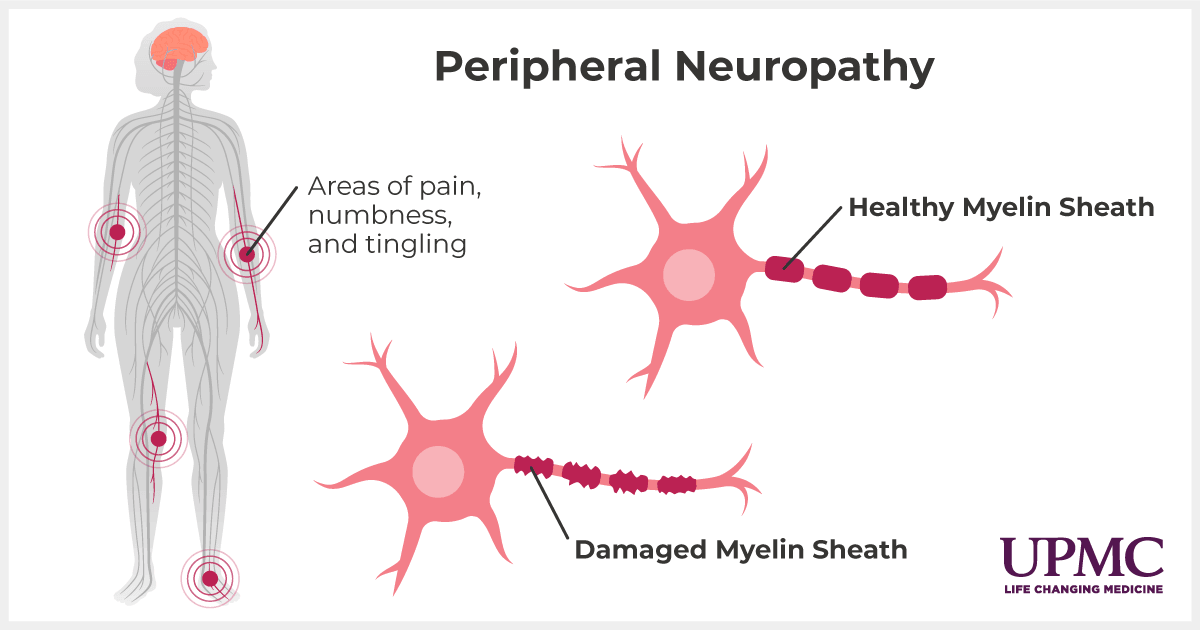
What are the types of peripheral neuropathy?
There are two types of peripheral neuropathy: inherited and acquired.
Inherited peripheral neuropathy
Inherited peripheral neuropathy is caused by genetic changes that are passed from biological parents to their children and are present at birth.
Types include:
- Charcot-Marie-Tooth disease — Affects sensory and motor nerves in the arms, hands, legs, and feet.
- Friedreich ataxia — Causes nerve damage that leads to movement problems.
- Giant axonal neuropathy (GAN) — A rare, progressive disorder that causes nerve damage over time.
Acquired peripheral neuropathy
Acquired peripheral neuropathy develops during your lifetime.
Types include:
- Chemotherapy-induced peripheral neuropathy — A side effect of cancer treatment.
- Chronic inflammatory demyelinating polyneuropathy (CIDP) — A progressive disorder that occurs when your immune system attacks the covering of your nerves.
- Diabetic neuropathy — Occurs in people with diabetes.
- Guillain-Barré syndrome — Occurs when your immune system attacks your nerves.
- Meralgia paresthetica — Occurs when a sensory nerve in the thigh is compressed.
- Multifocal motor neuropathy — A rare immune disorder that causes progressive muscle weakness in the hands.
How common is peripheral neuropathy?
Peripheral neuropathy is a common condition, particularly among older adults and people with diabetes. Approximately two-thirds of people with diabetes have some degree of peripheral neuropathy.
What causes peripheral neuropathy?
According to the National Institute of Neurological Disorders and Stroke, diabetes is the leading cause of peripheral neuropathy in the U.S. Other causes of peripheral neuropathy include:
- Autoimmune disorders.
- Nutritional or vitamin imbalances, excessive alcohol consumption, and exposure to toxins.
- Chemotherapy medications.
- Genetic mutations passed from parent to child.
- Hormonal imbalances.
- Infections.
- Injury.
- Kidney and liver disorders.
- Tumors.
- Vascular disorders, which cause problems with blood circulation.
- Peripheral neuropathy that has no identifiable cause is known as idiopathic neuropathy.
Peripheral neuropathy risk factors
You may be at higher risk of peripheral neuropathy if you have:
- An autoimmune condition.
- Cancer that requires chemotherapy treatment.
- Diabetes.
- Deficiency of vitamin B12 or other B vitamins.
- Excessive consumption of alcohol.
- Hormonal imbalances.
- Kidney or liver disorders.
- Nerve injury.
- Vascular problems.
- Viral, bacterial, fungal, or parasitic infections.
Complications of peripheral neuropathy
Peripheral neuropathy can cause complications, including:
- Falls and related injuries.
- Foot deformities, such as pes cavus and hammer toes.
- Foot ulcers and infections.
- Digestive issues.
- Muscle loss.
- Organ damage.
- Pain.
How can I prevent peripheral neuropathy?
Not all causes of peripheral neuropathy are preventable.
However, you may be able to reduce your risk by:
- Avoiding exposure to toxins.
- Eating a balanced diet rich in vitamins and minerals.
- Getting regular exercise.
- Limiting alcohol consumption.
- Maintaining a healthy weight.
- Managing chronic conditions, especially diabetes.
- Wearing safety equipment.
What Are the Signs and Symptoms of Peripheral Neuropathy?
Peripheral neuropathy symptoms are classified by the type of nerve that is affected, including:
- Autonomic — Affects nerves that control automatic body functions, such as breathing, digestion, blood pressure, and hormones.
- Motor — Affects nerves that control muscle movement.
- Sensory — Affects nerves that transmit information about sensations, such as touch, temperature, vibration, position sense, and pain.
Autonomic symptoms
Autonomic symptoms affect the regulation of automatic body functions, including:
- Blood pressure.
- Bowel and bladder control.
- Sexual arousal.
- Sweating.
- Vision.
Motor symptoms
Motor symptoms cause problems with movement and may include:
- Muscle loss.
- Muscle spasms and cramps.
- Muscle weakness.
Sensory symptoms
Sensory symptoms affect sensation and may include:
- Loss of balance.
- Numbness.
- Tingling.
- Pain.
When should I see a doctor about my peripheral neuropathy symptoms?
If you have symptoms of peripheral neuropathy, you should schedule an appointment with your doctor as soon as possible. Getting early treatment can reduce your risk of serious complications.
How Do You Diagnose Peripheral Neuropathy?
To diagnose peripheral neuropathy, your doctor will perform a physical and neurological exam and review your symptoms and medical history. Your doctor may also order tests to confirm your diagnosis or rule out other problems.
What to expect during your visit
During your visit, your doctor will:
- Ask you about your symptoms.
- Order tests.
- Perform a physical and neurological exam.
- Review your medical history.
Tests to diagnose peripheral neuropathy
Tests to diagnose peripheral neuropathy include:
- Blood and urine tests — Checks for diabetes, vitamin deficiencies, liver or kidney dysfunction, other metabolic disorders, infections, and signs of abnormal immune system activity.
- Electromyography (EMG) — Sometimes called an electromyogram, an EMG allows a doctor to record and study the electrical activity of your muscles.
- Genetic testing — Looks for genetic changes that may be linked to inherited conditions.
- Magnetic resonance imaging (MRI) — Creates images of your nerves to look for damaged or abnormal areas.
- Nerve biopsy — A procedure to take a sample of one of your nerves to look for damage to the myelin sheath.
- Nerve conduction study (NCS) — Measures the speed of electrical activity passing through your nerves.
- Neurodiagnostic skin biopsy — Involves removing a small piece of skin under local anesthesia to examine nerve fiber endings.
- Neurological examination — A noninvasive test to assess your reflexes, balance, movement, memory, and cognitive abilities.
Peripheral neuropathy prognosis
Depending on the cause, peripheral neuropathy can be temporary or permanent. Mild cases are not typically life-threatening, but more severe cases can affect critical body functions, mobility, and quality of life. Your doctor will talk to you about your prognosis.
What is the life expectancy of someone with peripheral neuropathy?
Your life expectancy after a peripheral neuropathy diagnosis depends on the underlying cause of your condition. Although peripheral neuropathy doesn’t usually cause death, it is linked to reduced life expectancy due to the risk of related complications.
How Do You Treat Peripheral Neuropathy?
The goal of peripheral neuropathy treatment is to reduce symptoms and to treat any underlying conditions that cause or lower susceptibility to neuropathy to prevent the condition's progression. Treatment options may include:
Lifestyle changes
Your doctor may recommend lifestyle changes to manage peripheral neuropathy symptoms, including:
- Avoiding alcohol.
- Eating a healthy diet.
- Supplementing deficient vitamins.
- Exercising.
- Maintaining a healthy weight.
- Managing diabetes and other chronic conditions.
- Quitting smoking.
Autoimmune disorder treatments
If your peripheral neuropathy is caused by an autoimmune condition, your doctor may recommend therapies that suppress your immune system.
Medications
Your doctor may recommend medications to treat:
- Autoimmune disorders.
- Bowel and bladder problems.
- Pain.
- Sexual dysfunction.
- Vitamin deficiencies.
Other treatments for peripheral neuropathy
Other treatments for peripheral neuropathy may include:
- Foot care — Inspecting your feet daily and having regular visits with a podiatrist may prevent complications.
- Genetic counseling and testing — To determine whether your condition is due to a gene mutation inherited from a biological parent.
- Mobility assistance — Using a cane, walker, wheelchair, braces, or splints to improve your ability to move.
- Physical therapy — To improve balance, strength, and mobility.
- Surgery — Can relieve pressure on a nerve or group of nerves.
Why Choose UPMC for Peripheral Neuropathy Care?
When you choose UPMC for peripheral neuropathy care, you will receive:
- Multidisciplinary care — Our team of neurologists will work with other medical specialists to develop a customized treatment plan that reduces your risk of complications.
- Access to advanced clinical trials — Our team participates in national, multicenter clinical trials evaluating new treatment options, allowing you to contribute to research advancing care for nerve disorders.
- Seamless, ongoing treatment — If you are diagnosed with peripheral neuropathy, our team will develop a follow-up care plan that includes ongoing monitoring and symptom management as needed.
