















Myelopathy is a condition that happens when your spinal cord is injured. This can occur from many causes, including:
- Compression.
- Inflammation (myelitis).
- Injury.
- Ischemia (lack of blood flow).
- Injury.
- Tumors.
Myelopathy may cause symptoms such as back pain, numbness, and tingling in your limbs and torso. It can also cause weakness, bowel and bladder dysfunction, and ataxia (imbalance).
UPMC neurology experts provide advanced care for myelopathy, including nonsurgical treatment with medication and physical therapy. If needed, our neurologists will collaborate with our neurosurgery and orthopaedic experts to coordinate surgical spinal decompression.
On this page:
What Is Myelopathy?
Myelopathy is a condition that occurs when your spinal cord is injured. Many different factors can cause myelopathy, including:
- Compression.
- Inflammation (myelitis).
- Injury.
- Ischemia (lack of blood flow).
- Injury.
- Tumors.
Myelopathy can cause a range of symptoms, including:
- Back pain.
- Bowel and bladder dysfunction.
- Imbalance (ataxia).
- Numbness and tingling in your limbs and torso.
- Weakness.
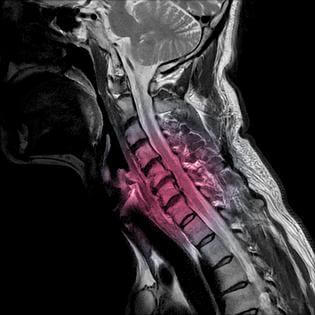
What are the types of myelopathy?
Myelopathy can be classified by location, cause, or severity. The area of the spine affected by myelopathy determines which parts of the body are affected. The spinal cord runs from the brainstem to the upper lumbar spine.
- Cervical myelopathy — Myelopathy that occurs in your neck and is often caused by age-related changes in your spine. This is common as a result of injury from accidents. Inflammation, such as from multiple sclerosis, may also affect the cervical cord.
- Lumbar myelopathy — Myelopathy that occurs in your lower back. This type is rare because most people's spinal cords end at the upper lumbar levels.
- Thoracic myelopathy — Myelopathy that occurs in your mid- or upper back. This type is uncommon but can occur with inflammation and ischemia. It is less likely with compression.
How common is myelopathy?
Myelopathy is a relatively common condition, especially after injury or in people over age 40. It's also not uncommon in people with multiple sclerosis.
What causes myelopathy?
Myelopathy can occur at any time your spinal cord is injured.
Common causes include:
- Herniated disc — When one of your spinal discs, which provide cushioning between your vertebrae, bulges out and puts pressure on your spinal cord.
- Injury.
- Ischemia (lack of blood flow) — A condition known as spinal cord stroke.
- Spinal infection or inflammation.
- Spinal stenosis — Narrowing of your spinal column.
- Spinal tumors — These may be within the cord, outside of the cord, or within the bony supporting structures.
- Spondylosis (arthritis of the spine) — This may result in spinal stenosis, a condition in which the canal through which the spinal cord travels narrows, compressing it.
Myelopathy risk factors
You may be at higher risk of myelopathy if you:
- Are male.
- Are over age 40.
- Have a history of a spinal injury or other spine problems, such as a herniated disc.
- Have cancer that has a risk of metastasis to the bone.
- History of multiple sclerosis or other inflammatory conditions.
Complications of myelopathy
If left untreated, myelopathy may worsen over time and cause:
- Paralysis.
- Permanent nerve damage.
- Severe pain.
How can I prevent myelopathy?
There is nothing you can do to prevent myelopathy caused by injury or normal aging.
However, you may be able to reduce your risk of myelopathy by:
- Getting treatment if back problems develop.
- Lifting heavy objects with your legs and core, instead of your arms and back.
- Strengthening and stretching your back muscles.
- Contacting a physician if concerning symptoms develop.
What Are the Signs and Symptoms of Myelopathy?
Symptoms of myelopathy vary depending on the part of your back that is affected. They may include:
- Abnormal sensations, such as numbness, tingling, or weakness in your arms, hands, legs, or feet.
- Loss of balance or coordination.
- Loss of bladder or bowel control.
- Loss of fine motor skills, such as holding a pen or tying your shoes.
- Pain in your neck or back.
When should I see a doctor about my myelopathy symptoms?
If you have symptoms of myelopathy, schedule an appointment with your medical provider right away. Getting fast treatment may reduce your risk of permanent nerve damage.
If symptoms are severe, dial 911 or go to the nearest emergency department.
How Do You Diagnose Myelopathy?
To diagnose myelopathy, your provider will perform physical and neurological exams. They'll also review your symptoms and medical history.
Your provider may also order tests to confirm your diagnosis or rule out other problems. They'll often order an MRI of the spine to confirm the nature and location of the myelopathy. If an MRI can't be performed, then you may need a CT or CT myelogram.
What to expect during your visit
During your visit, your doctor will:
- Ask you about your symptoms.
- Order tests.
- Perform a physical and neurological exam.
- Review your medical history.
Tests to diagnose myelopathy
Your doctor may order tests to confirm your diagnosis or rule out other conditions, including:
- Blood and urine tests — Check for infections and abnormalities.
- CT — Creates images of bones, organs, and tissues inside your body. This or a CT myelogram may be ordered if an MRI cannot be performed.
- CT myelogram — Uses contrast dye administered through a lumbar puncture or spinal tap and real-time CT to create images of your spine.
- Evoked potential test — Measures how quickly your brain responds to sights, sounds, and sensations.
- MRI — Creates images of your brain and spine using contrast dye to look for damaged or abnormal areas. Typically, this test confirms the presence and nature of myelopathy.
- X-ray — Uses small doses of radiation to create images of your spine.
Does myelopathy show on MRI?
Yes. MRI can show spinal cord compression and is a standard imaging test for diagnosing myelopathy.
Myelopathy prognosis
Your prognosis after a myelopathy diagnosis depends on the underlying cause and severity of your condition and how long you’ve had your symptoms.
Getting early treatment may improve your prognosis. Left untreated, myelopathy may lead to permanent nerve damage.
Can myelopathy be reversed?
Nerve damage caused by myelopathy can’t always be reversed. But early treatment can relieve symptoms and prevent further nerve damage.
How Do You Treat Myelopathy?
Treatment depends on the location and cause.
The goals of myelopathy treatment are to relieve symptoms and reduce the risk of permanent nerve damage.
Treatment options may include:
Nonsurgical myelopathy treatment
Nonsurgical treatments may relieve myelopathy symptoms. However, they do not treat the underlying cause of spinal compression.
For mild symptoms or while waiting to have surgery, your doctor may recommend:
- Medications to manage pain or swelling.
- Physical therapy.
- Wearing a brace to support your back.
You may need medical treatments like steroids for myelopathy caused by inflammation, such as with transverse myelitis or multiple sclerosis.
You may need radiation therapy for vertebral metastasis causing spinal cord compression.
Spinal decompression surgery for myelopathy
If nonsurgical treatments don’t relieve your myelopathy symptoms or your condition is severe, your doctor may recommend spinal decompression surgery. This surgery can relieve pressure on your spinal cord.
The type of procedure your doctor recommends depends on the cause of your myelopathy.
Spinal decompression surgery options may include:
- Anterior cervical discectomy with fusion (ACDF) — A procedure to remove a damaged disc and perform a spinal fusion through an incision in the front of your neck.
- Discectomy with fusion surgery — A minimally invasive procedure to remove a herniated or ruptured disc in your spine and fuse the vertebrae (bones of your spine) together for stability.
- Disc replacement — Replaces a damaged spinal disc with an artificial one.
- Laminectomy — A procedure to relieve pressure on your spinal nerves by removing a small portion of one of your spinal bones called the lamina.
- Laminoplasty — A procedure to relieve pressure on your spinal cord by opening and securing part of your spinal bone called the lamina.
- Posterior cervical discectomy with fusion (PCDF) — A procedure to remove a damaged disc and perform a spinal fusion through an incision in the back of your neck.
- Spinal fusion — Fuses two vertebrae (spinal bones) to eliminate motion between the vertebrae and relieve pain.
Why Choose UPMC for Myelopathy Care?
When you choose UPMC for myelopathy care, you will receive:
- Access to advanced clinical trials — Our team participates in national, multicenter clinical trials evaluating new treatment options. This allows you to contribute to research advancing care for spinal nerve disorders.
- Advanced surgical technology and techniques — If you need spinal decompression surgery, our neurosurgeons use the most advanced technology to perform safe, effective, and minimally invasive procedures.
- Multidisciplinary care — Our team of neurologists and neurosurgeons will work together to develop a customized treatment plan that reduces your risk of complications.
