















Suffering from a dislocated shoulder? Learn the signs of partial and complete dislocations and the risk factors for athletes in contact sports.
What Is a Dislocated Shoulder?
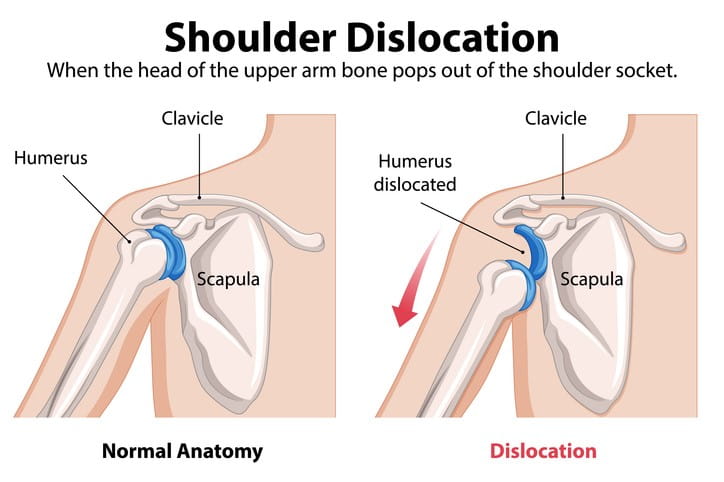
A dislocated shoulder occurs when the top of the bone of your upper arm (humerus) comes out of the socket in your shoulder (scapula). This can be a partial or complete dislocation.
- A partial shoulder dislocation means that the bone has gone back into the scapula on its own.
- A complete shoulder dislocation means the bone has not gone back into the proper place, and requires medical attention. You should not try to force the bone back into the scapula yourself.
What are the causes and risk factors for a dislocated shoulder?
A dislocated shoulder can result from a variety of situations that involve impact to the shoulder.
Common causes of dislocated shoulders include:
- Any hard fall onto the shoulder.
- Forceful hitting, lifting, or throwing.
- A hit to an outstretched arm.
Athletes at risk of shoulder dislocations include:
- Football players
- Hockey players
Complications of a dislocated shoulder
Without proper and thorough rehab, you risk another shoulder dislocation.
Trained physical therapists at UPMC Sports Medicine can provide rehab and help you get back in the game after a partial or complete shoulder dislocation.
What Are the Symptoms of a Dislocated Shoulder?
When a shoulder dislocation occurs, the first symptom is an immediate and strong pain.
You may also have other symptoms such as:
- Instability in shoulder.
- Weakness in the shoulder area.
- Inability to move the shoulder.
- Swelling, bruising, numbness, or tingling around the shoulder, or in the arm or fingers.
How Do You Diagnose a Dislocated Shoulder?
In the event of a partial or complete shoulder dislocation, you should consult a medical expert right away to diagnose the injury.
During the appointment, the doctor will assess your shoulder and symptoms.
He or she may order an imaging test to confirm severity of the shoulder dislocation.
How Do You Treat a Dislocated Shoulder?
Treatment for a dislocated shoulder includes:
- Nonsteroidal anti-inflammatory drugs (NSAIDs).
- Rest and immobilization of the arm.
- Ice or a cold pack for the first two days, followed by applying heat as needed after that.
- Rare cases require surgery for repeat dislocations of the same shoulder.
To prevent re-injury, begin a regimen of strengthening pr physical therapy exercises and use the proper equipment for the sport.
Recovery time will depend on dislocated shoulder symptoms and severity of the injury.
Return to Play program
You may be a candidate for the Return to Play program if you are an athlete who has been treated for a sports injury, completed physical therapy, and is looking for additional support to help you safely and confidently reengage with your sport.
