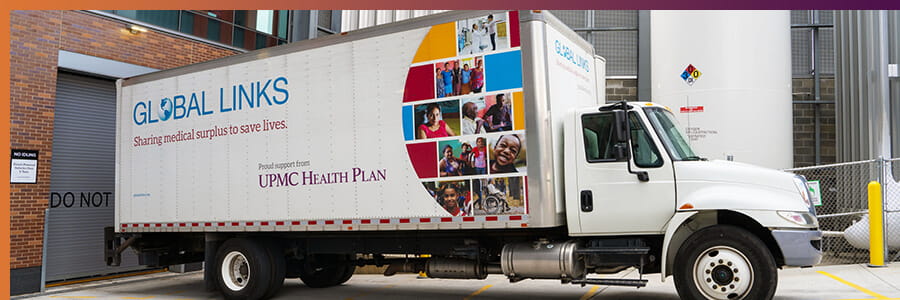
UPMC and UPMC Health Plan are proud to support Global Links in its mission to improve the health of our communities for over three decades.
Since 1989, Global Links has been improving health in communities in need in the Pittsburgh area and internationally. The organization rescues and shares medical surplus to improve access to quality healthcare and needed materials.
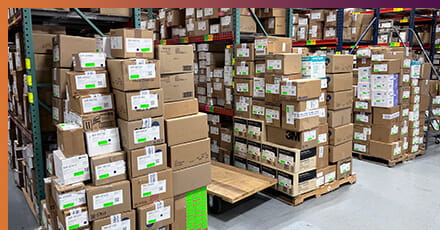
Global Links processes about 230 tons of surplus annually with volunteer hours totaling about 11,000.
“Bringing people together to improve the lives of people we may never know, it’s a great honor,” says Angela Garcia, executive director, Global Links.
Learn more about Global Links and how you can help support health programs locally and internationally.
Read stories from volunteers below.
Inside UPMC Mercy, furniture like couches, chairs, filing cabinets, tables, and more lines the ninth-floor hallway.
The items are not being discarded. Instead, they are awaiting a second life, one that could prove life-changing for someone else.
The items are going to Global Links, a Pittsburgh-based nonprofit that rescues surplus medical supplies and furnishings. Global Links then provides the items to clinics, doctors, and hospitals in under-resourced communities.
“It's so wonderful,” says Stacy Bodow, senior outreach and engagement manager, Global Links. “Because the partners that we work with have the expertise to provide healthcare to their communities, but what they need are the equipment, furnishings, and supplies to do so.”
UPMC is proud to support Global Links in its mission to improve the health of our communities for over three decades. In 2024-2025, Global Links presented UPMC Mercy, UPMC Children’s Hospital of Pittsburgh, UPMC St. Margaret, and UPMC Washington with its Outstanding Hospital Partner Award.
“Seeing the things that Global Links does and the stories that they share, just to be a part of that, it's really rewarding,” says Mike Carlson, director, Environmental Services, UPMC Mercy.
Mike says the hospital had been storing “a ton” of furniture since the COVID-19 pandemic changed how medical facilities operate. Once they started getting everything back out, they quickly realized they had a lot of unneeded furniture.
Through UPMC’s sustainability team, the hospital reached out to Global Links about finding a new home for everything.
“They said they could make really good use of it,” Mike says. “So, from a sustainability aspect, it takes something that we weren't using (and) gives it to somebody that can put it to great use.”
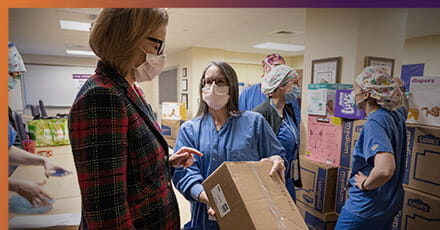
Megan Sotirokos, Global Links’ manager of surplus procurement and purchasing, met with the team at UPMC Mercy to assess everything. She then determined which items would be a good fit for their programs.
Next, she arranged a pickup date and coordinated logistics with the Global Links warehouse team, led by Ray Mollica.
“Our warehouse team is amazing,” Stacy says. “They are packing the stuff up, getting it downstairs from the ninth floor to the loading dock (and) into our trucks, which will then go back to Global Links.
“They'll unload it, and that's when they really start to evaluate. They'll do any last-minute cleaning or fixing that needs to happen so that we can offer them out to our programs.”
Stacy says most of the hospital furnishings will benefit international programs in regions like Latin America and the Caribbean. Global Links works with the World Health Organization and the Pan American Health Organization.
“Our team will visit and do needs assessments with the local ministries of health,” Stacy says. “But we work mostly in rural and indigenous areas in these countries. As long as the area has a building, a health care facility building, and a health care worker that they can pay, we can fill in the gaps with all the other things like furnishings.”
Lifesaving Surplus
Some of the communities Global Links assists have built new clinics, but they are unable to furnish them. Other times, it may take residents several hours to reach the nearest medical facility. That is time patients do not have to spare if they go into labor or suffer an emergency.
“To have a clinic in your community that is furnished and all the medical supplies coming from some of these UPMC hospitals is literally lifesaving,” Stacy says. “It changes everything.”
Stacy recalls a trip the Global Links team made to Bolivia. They met a doctor who was using a pair of rusty scissors that were partially broken.
“They were able to provide him with a whole bunch of different surgical instruments, and he was just thrilled beyond belief,” Stacy says.
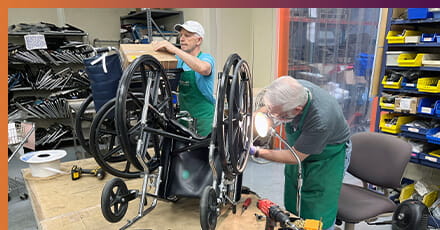
Another time, they provided a wheelchair to a man in Honduras who had been bedbound for decades.
“That's one of those things that makes you choke up,” says volunteer Dave Engle.
Dave, a retired neurosurgeon, is one of six volunteers who repair wheelchairs at Global Links.
“He was just crying with happiness,” Dave recalled.
The stories from Bolivia and Honduras are just two examples of the life-changing impact of Global Links’ work.
“What we're doing here, it gets flown away somewhere, and you give someone a chance to have a better life," Dave says. "That's pretty good.”
At UPMC, Life Changing Medicine means supporting our communities through sustainability and sharing surplus.
Pittsburgh (KDKA): Pittsburgh-area nonprofit organization collects supplies to distribute to those in need.
Read stories from volunteers at Global Links