Marshall “Lee” Tempest first heard of the Pittsburgh Steelwheelers after he suffered a spinal cord injury when he was 18.
Little did he know then that it would turn into a 30-year journey as both a player and a coach.
“I watched the people start playing, and I instantly fell in love with the chance to get back into sports like that,” Lee recalls.
 The Pittsburgh Steelwheelers organization provides adaptive programs for individuals with disabilities to play competitive sports. The nonprofit’s main sports are wheelchair rugby, wheelchair basketball, and handcycling. UPMC proudly supports the Steelwheelers’ mission to foster a supportive and accepting environment through sports.
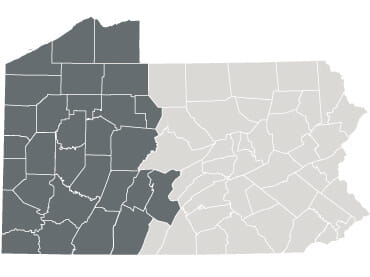
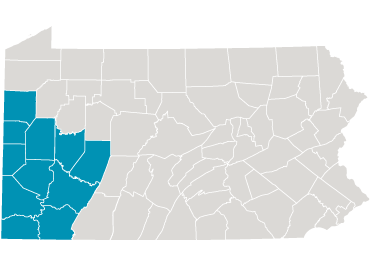
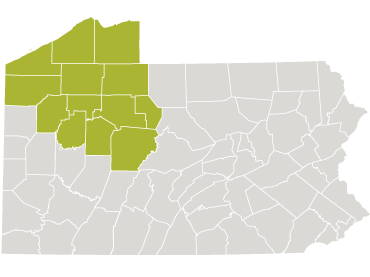
Founded in 1977, the Steelwheelers include participants from western Pennsylvania, eastern Ohio, and northern West Virginia. That includes not only people with disabilities, but also different ethnicities, backgrounds, and experiences.
“That’s what really teaches everybody a lot,” says Lee, who also serves as the Steelwheelers’ president. “It’s also the different cultures that we bring that come to play on this team and from different areas. We become a community together.”
That sense of community can even stretch across the pond.
Originally from London, Sivashankar Sivakanthan admittedly had a limited basketball background before joining the Steelwheelers. He met Lee at a community event, and he encouraged Sivashankar to try wheelchair basketball.
“What I enjoy most about this sport is the team and the community that goes along with it,” Sivashankar says. “When I come to practices, I have the pleasure of playing with younger kids and teaching them and playing with various adults as well.”
Sivashankar’s game has gotten better, and he’s played across the United States and back home in London. Sivashankar encourages anyone, even those with a limited basketball background, to try wheelchair sports.
“There is no harm in trying it to see if it is something for you,” he says. “If you don't like the sport, I'm sure you would like the community of friends that come along with it and just want to participate because of it.”
Friendship, Confidence, and Belonging
 Kaitlyn Parente’s daughter, Maelynn “Mazey” Tribendis, was born with cerebral palsy and uses a wheelchair.
They discovered the Steelwheelers through one of Mazey’s physical therapists. Within a few months, Kaitlyn noticed her daughter was already improving on the court. She started with dribbling, then progressed to passing and receiving the ball.
“She gets very excited for practice days,” Kaitlyn says. “On Tuesdays, she’s ready to go. She loves it. She has energy, so it’s cool to see.”
In addition to the physical benefits, playing adaptive sports can also support mental health. Kaitlyn has noticed that being around her peers and having fun have lifted her daughter’s spirits and given her a sense of belonging.
Mazey’s friends and sister will even join her at practice, giving them a newfound perspective on the adversity adaptive athletes overcome. She’s also made new friends through the Steelwheelers. They’ll text and talk about practice, forming bonds that extend beyond the court.
“You get to practice and work hard,” Mazey says. “I got a lot stronger and a lot better at basketball. It feels good that I’m able to play a sport and be a part of something.”
For Kaitlyn, it’s been an emotional journey watching her daughter flourish and seeing her confidence grow. She cites how positive and supportive the organization is, from the coaches to the players and their families.
“The Steelwheelers have made such a big impact in our lives,” Kaitlyn says. “It’s been an amazing journey with them.”
Leading by Example
Every team needs a good coach, someone who can lead and serve as a role model for its players. For the Steelwheelers, it’s clear they found that person in Lee.
“Our family loves Coach Lee,” Kaitlyn says. “Just to see everything he overcomes every day, and you would never know it. He shows up and works hard.”
Sivashankar echoes those sentiments. He describes Lee as selfless and always giving back. Whether it’s on or off the court, he always makes time.
“He has been a fantastic influence and mentor,” Sivashankar says. “And guidance, not only for myself, but for the rest of this team. He’s been a tremendous force.”
When asked what he’s learned most about himself since joining the Steelwheelers, Lee cites his passion for helping others with disabilities. He likes getting to know an individual and their family and helping them find something that makes them happy.
While he enjoys being a full-time player, coaching allows him to watch participants learn and grow from youth athletes to becoming members of the adult team.
“It’s taken a different perspective that I’ve gotten a little bit older as a coach,” Lee says. “I can now see others and what they accomplished over time.”
Away from the court, Lee remains equally committed to helping people with disabilities. He is a spinal cord injury research study coordinator at UPMC Mercy. He’s also co-leader of the spinal cord injury peer support group at UPMC Rehabilitation Institute.
Growing up in a rural town, he didn’t really know anyone else who was active in a wheelchair. But playing basketball and meeting other athletes boosted his confidence. It was also a lesson in what’s possible.
“The whole world is accessible, but sometimes you need that uplifting to be like, ‘I can accomplish things,’” Lee says. “It gave me the confidence to accomplish more things and meet more people with disabilities to help them do the same, like, ‘It’s going to be alright. We can do this together.’”
At UPMC, Life Changing Medicine means building a community through teamwork. To learn more about getting involved with the Pittsburgh Steelwheelers, donation opportunities, and more, visit the Pittsburgh Steelwheelers website.