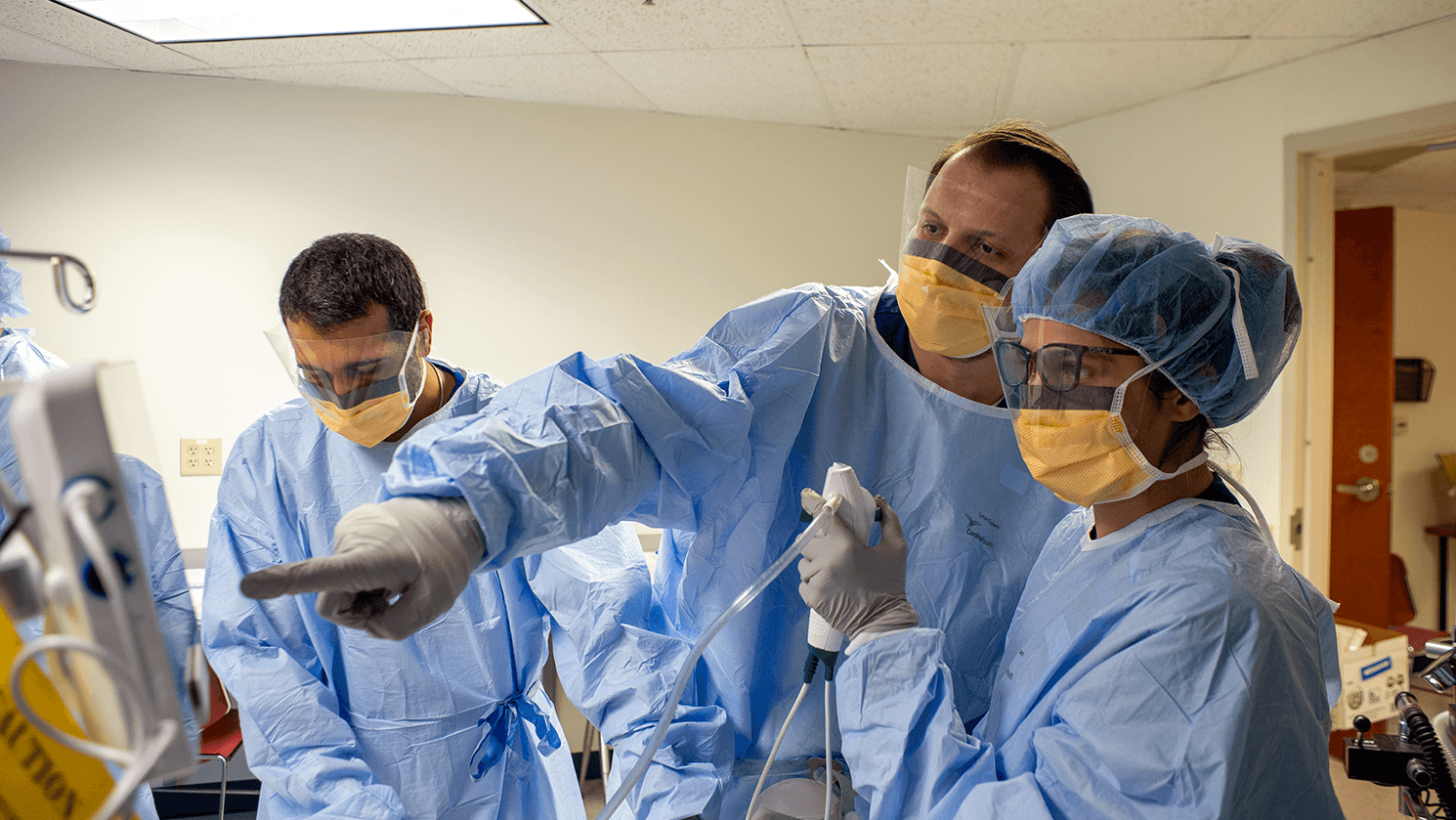
Simulation is a central component of the UPMC Harrisburg Critical Care Medicine Fellowship. Fellows participate in a structured curriculum designed to develop procedural competence, crisis leadership, and clinical decision-making in complex critical care scenarios.
Our program integrates simulation throughout fellowship training, allowing fellows to practice high-risk clinical situations in a safe learning environment while receiving structured feedback from experienced faculty.
From Our Program Director
“Simulation is an extremely important part of medical training and practice. We take a simulation-first approach to procedural training — fellows build their technical foundation in a safe environment before performing procedures on patients. We use both low- and high-fidelity simulation adapted to the specific task, and we are always looking for ways to expand and improve what we offer our fellows.”
— Christopher Franz, MD, Program Director, UPMC Harrisburg Critical Care Medicine Fellowship
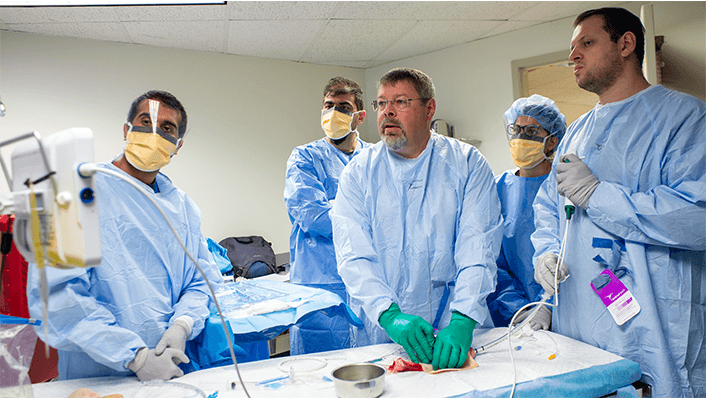
CCM Department Chief leading our percutaneous tracheostomy lab
Simulation Bootcamp
Every fellow begins the year with an intensive simulation bootcamp before independent clinical responsibilities begin. This “simulation-first” approach ensures that technical skills are developed in a structured, supervised environment before fellows perform procedures at the bedside. The bootcamp covers 18 distinct simulation types:
- Central line placement.
- Cardiac POCUS.
- Lung POCUS.
- Abdominal POCUS.
- Vascular POCUS.
- Chest tube and thoracentesis.
- Bronchoscopy.
- Percutaneous tracheostomy.
- Basic airway management.
- Direct and video laryngoscopy.
- Fiberoptic airway.
- Surgical airway.
- Airway crisis simulation.
- Communication scenarios.
- Local anesthesia and respiratory.
- Code and RRT management.
- Fundamentals of Mechanical Ventilation.
- PA CUSP patient safety program.
Year-Long Simulation Curriculum
Beyond bootcamp, 11 dedicated simulation sessions are built into the fellowship’s didactic curriculum throughout the year. These sessions are sequenced to align with clinical rotations and progress in complexity as fellows advance in training.
Airway and procedural simulation
Hands-on sessions cover difficult airway scenarios, direct and video laryngoscopy, rescue algorithms, surgical airway techniques, and fiberoptic intubation. Sessions reinforce technical competence while emphasizing preparation, troubleshooting, and team coordination. Additional sessions round out our curriculum include pericardiocentesis and transvenous pacemaker placement.
Crisis resource management
Team-based simulations address ICU emergencies including cardiac arrest, difficult airway, acute respiratory failure, and hemodynamic collapse. Fellows practice leading multidisciplinary teams, prioritizing interventions, and maintaining situational awareness under pressure.
Mechanical ventilation and advanced support
Dedicated sessions address ventilator management and ventilator waveform interpretation. Fellows learn advanced respiratory and ventilator physiology and apply those concepts using a ventilator and test lung.
Communication and systems scenarios
Selected simulations focus on communication and leadership challenges, including goals-of-care discussions, escalation of care, and interprofessional coordination — reinforcing the non-technical skills essential to effective intensive care practice.
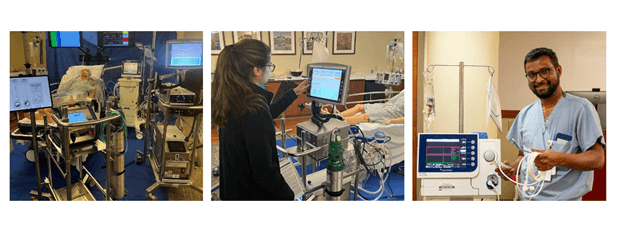
Mechanical circulatory support simulation
Fellows participate in a dedicated two-day mechanical circulatory support simulation course. This standalone experience provides hands-on training with MCS devices and scenarios that reflect the complexity of managing hemodynamically compromised patients in the modern ICU.
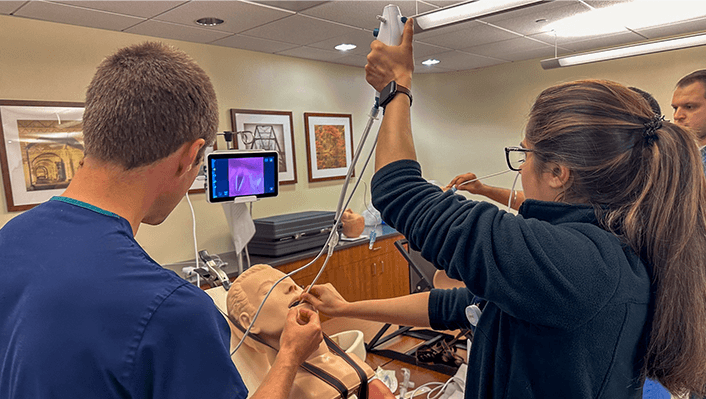
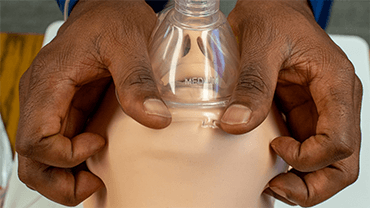
Fiberoptic intubation on procedural trainer
Educational Approach
Simulation sessions are faculty-led and designed to foster psychological safety, allowing fellows to take risks, make decisions, and learn from mistakes without patient harm. Structured debriefing emphasizes reflective learning, clinical reasoning, and team dynamics. Scenarios are tailored to fellows’ level of training, with increasing complexity as independence grows.
We use both low- and high-fidelity simulation, selected based on the specific learning objective. Procedural tasks may use task-specific trainers designed for tactile realism, while complex team scenarios use high-fidelity mannequins with dynamic physiology. The goal in every case is fidelity where it matters most.
Simulation Environment
Fellows train in a high-fidelity simulation environment equipped with advanced mannequins, procedural trainers, and ICU-specific equipment. Interprofessional participation mirrors real clinical teams, enhancing scenario realism and providing experience with the communication dynamics of actual ICU care.
Integration Into Fellowship Training
Simulation is woven throughout the fellowship and aligned with clinical rotations and didactic teaching. This longitudinal approach ensures that technical proficiency and leadership skills develop together over the course of the year.
We are also expanding our simulation curriculum to include joint sessions with the UPMC Harrisburg Emergency Medicine residency, with a focus on interprofessional team scenarios that reflect the real dynamics of critical care delivery.
Preparing Fellows for Independent Practice
Our simulation program prepares fellows to manage critical events with confidence, communicate effectively under pressure, and lead multidisciplinary teams in complex situations. The goal is not only technical mastery, but the development of judgment, composure, and adaptability required for modern intensive care practice.
“The simulation program was an outstanding part of my training. It created a realistic, supportive environment where fellows could practice critical procedures, manage complex ICU scenarios, and build confidence before facing these situations at bedside."
— Dr. Omar Al Janabi, Chief Fellow
Trained to Practice Anywhere
Our mission is to train critical care physicians who can practice with confidence in any ICU — academic or community, straightforward or complex. That mission is what shaped this simulation curriculum. Before you care for a patient, you’ve practiced the procedure. Before you lead a code, you’ve run it in simulation. The breadth of what we cover — from basic airway to mechanical circulatory support — reflects the full scope of what modern intensivists face.
For fellows who want to go further, our program also offers dedicated ECMO training — one of our signature clinical experiences.
The UPMC Harrisburg Critical Care Medicine Fellowship is a two-year ACGME-accredited program. Applications are accepted through ERAS during the standard fellowship application cycle.
Follow us on Instagram: @ccmfellowshbg
















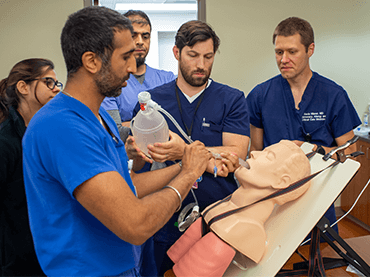 The UPMC Harrisburg Critical Care Medicine Fellowship provides comprehensive training in critical care medicine. Fellows develop advanced clinical judgment, procedural competence, and leadership skills while working alongside experienced faculty in a collaborative learning environment.






 The UPMC Harrisburg Critical Care Medicine Fellowship provides a structured educational ecosystem designed to develop highly capable intensivists through mentorship, simulation-based training, advanced ultrasound education, and scholarly development.
 Christopher Franz, MD
 Matthew Zaccheo, DO
 Akshay Avula, MD
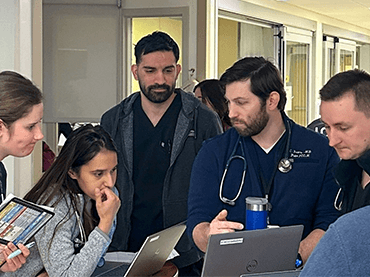 The fellowship uses a 26 two-week block schedule designed to balance ICU experience, subspecialty exposure, and electives. Fellows complete 13.5 months of ICU training across ICUs in quaternary, tertiary, and community medical centers.
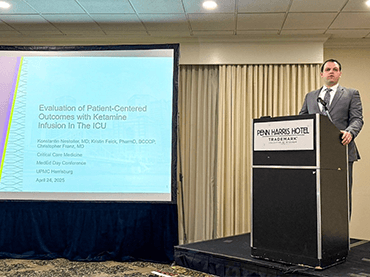 Scholarly activity is a core component of the UPMC Harrisburg Critical Care Medicine Fellowship. Our program is built around a straightforward idea: fellows do better research when they have real mentorship, real infrastructure, and real time to use them.
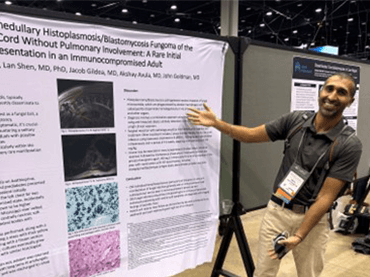 Our fellows have presented oral and poster presentations at the major national critical care meetings — CHEST, SCCM, and ATS — and have contributed to peer-reviewed publications in critical care journals. Research topics have spanned sedation and delirium, airway management outcomes, mechanical circulatory support, and the application of data science to clinical and educational questions.
